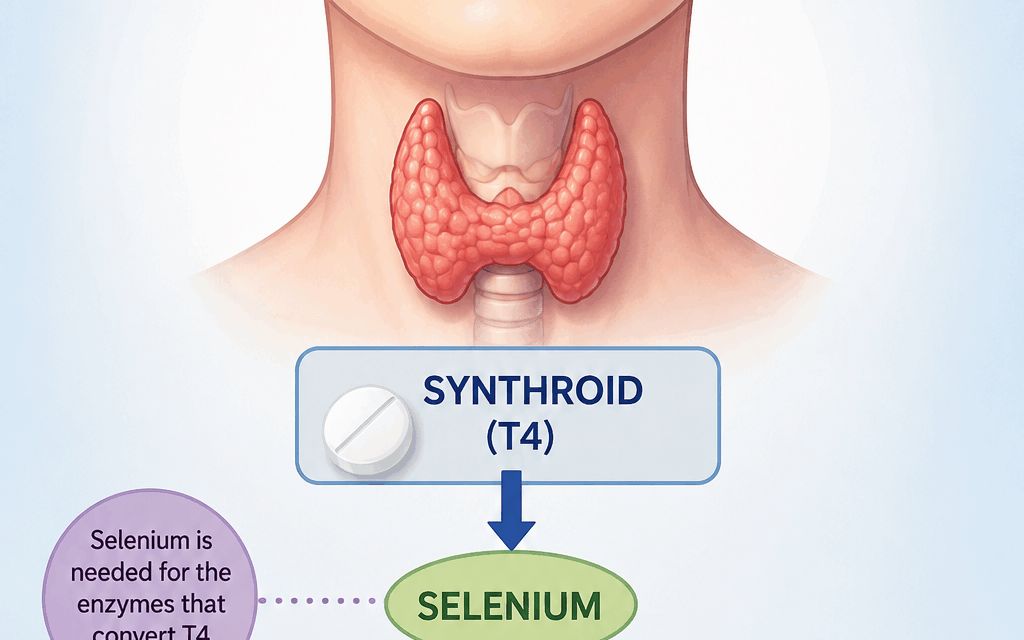
Synthroid Not Working? Maybe You Need Selenium
Synthroid, one of the most commonly prescribed medications for hypothyroidism, is a synthetic form of T4 thyroid hormone. The body must convert T4 into the more active hormone, T3, before it can do its job. Sometimes people continue to experience symptoms of hypothyroidism—even when their blood tests appear “normal.”
Selenium is required for the enzymes that convert T4 into T3. If you are low in selenium, your body may not produce enough of the active thyroid hormone. Taking a selenium supplement may improve this conversion and help relieve symptoms.
One study found that selenium supplementation increased T3 levels (but not total thyroid hormone) in healthy adults. Another study demonstrated that selenium deficiency can impair thyroid hormone metabolism and make hypothyroidism worse.¹˒²
Take no more than 200 mcg selenium daily (do not exceed the recommended dose—too much selenium can be toxic). Selenomethionine is one of the best-absorbed forms of selenium.
Selenium deficiency is only one possible reason thyroid symptoms persist. Other factors—including inadequate medication dosage, poor absorption, iron deficiency, low zinc status, and other medical conditions—may also contribute.
Click here to learn more about selenium and the thyroid
Selected References
- Am J Clin Nutr. 2009 Jun; 89(6): 1808–1814. Effects of selenomethionine supplementation on selenium status and thyroid hormone concentrations in healthy adults
- Biol Trace Elem Res. 1992 Apr-Jun;33:37-42. The role of selenium in thyroid hormone metabolism and effects of selenium deficiency on thyroid hormone and iodine metabolism