
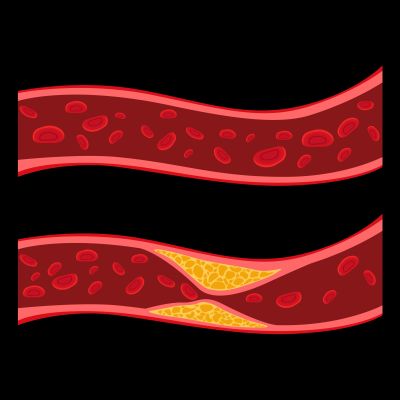
Endothelium: The Key to Vascular Health
Before there is high blood pressure, heart disease, arteriosclerosis or stroke, there is a quiet battle being fought in the vascular endothelium. The term vascular endothelium simply means the cells lining the blood vessels. It regulates vascular tone (constriction and relaxation) through factors such as nitric oxide (NO). It also prevents clotting, modulates inflammation, and controls permeability, functioning as an active endocrine organ.
What Can Go Wrong? The Progression of Endothelial Dysfunction
- It all starts with inflammation: Inflammation and oxidative stress from a poor diet, stress, smoking or high blood pressure damage the endothelial lining. The damaged endothelium fails to produce adequate nitric oxide, a vasodilator, leading to further endothelial dysfunction. More damage means less nitric oxide and less nitric oxide allows more damage.
- The more the cells are damaged, the more damage can continue to happen: The damaged barrier allows cholesterol (LDL) to accumulate underneath the endothelium. Immune cells (monocytes) are attracted to the site, passing into the vessel wall.
- Eventually the arteries “harden”: White blood cells, known as macrophages engulf the accumulated oxidized LDL, becoming overloaded “foam cells”. The buildup of these dead foam cells appears as a yellow, fatty streak, the first visible sign of atherosclerosis.
- Fibrous Plaque Development (Atherosclerosis): The body attempts to heal the damaged artery. Smooth muscle cells move into the area and lay down collagen to cover the fatty streak, forming a fibrous cap. This hardened lesion is a fibrous plaque, which narrows the opening and restricts blood flow.
- Plaque Rupture & Thrombosis: Inflammation can cause the fibrous cap to become fragile and rupture. When the plaque ruptures or erodes the body continues to try to fix it—sending platelets and creating a clot.
- Arteriosclerosis Progression: The artery wall loses elasticity. Over time, the chronic inflammation, cell death, and fibrosis harden the vessel (arteriosclerosis), reducing its ability to expand and contract, which increases blood pressure and further damages the endothelium.
Reducing Inflammation to Support Endothelial Health
Getting inflammation under control is vital: The most basic thing you can do is to minimize oxidative stress and inflammation from your diet; it is where damage to the endothelium starts [1]. Adherence to dietary patterns with protective effects on endothelial integrity may represent an effective strategy to promote lifelong health for both the heart and brain [2,3], both of which rely on a healthy vascular endothelium for proper function.
- Start with diet: Read the Roadmap to Health and Eat Your Way Out of Pain for a more complete understanding of how to improve the health of the vascular system with diet.
- Magnesium helps relax the blood vessel and helps reduce inflammation. It also enhances nitric oxide (NO) synthesis, acts as a natural calcium antagonist to prevent vasoconstriction, and lowers oxidative stress. Adequate magnesium inhibits endothelial dysfunction, a key step in atherosclerosis. Magnesium is vital for cardiovascular health, read more here.
- Antioxidants: Several antioxidants have been studied and found to be beneficial to the vascular system. These include resveratrol [4], vitamin C [5], glutathione [6], CoQ10 [7], and curcumin [8].
Nitric Oxide and Vascular Function
Just Say “NO”: Nitric Oxide, the Key to Vascular Health
The amino acids arginine and citrulline can help the body to produce nitric oxide, which is the key to vascular health.
Arginine: Arginine is a precursor to nitric oxide (NO); taking it enhances NO production [9-11]. Many companies sell arginine as a supplement to increase the nitric oxide produced by the endothelium of blood vessels. Increasing NO can relax the smooth muscle of blood vessel walls [13-16]. Enhancing circulation in this way has many clinical benefits, including lowering blood pressure [17-20], enhancing exercise performance [25], relieving intermittent claudication [24], and even helping with erectile dysfunction [26-29].
Citrulline is a precursor to arginine. Because it is treated differently by the body, taking it with arginine may produce NO more efficiently than simply taking arginine. Much of L-Arginine is eliminated by intestinal arginase activity. In contrast, L-citrulline is readily absorbed and at least in part converted to L-arginine. Oral L-citrulline supplementation raises plasma L-arginine concentration and augments NO-dependent signaling in a dose-dependent manner [30].
Arteriosclerosis vs Atherosclerosis
Atherosclerosis refers to plaque buildup within the artery wall, involving lipids, inflammatory cells, and calcium. Arteriosclerosis is a broader term describing stiffening of the arteries, which can result from calcification, fibrosis, and aging. Endothelial dysfunction contributes to both processes.
Nitric oxide (NO) helps relax blood vessels, but if arteries are stiff or calcified, increasing NO may have limited effect.
Related Articles:
Can’t Get Your Blood Pressure Under Control? Check These 4 Things
Selected References:
- Oxid Med Cell Longev. 2020 Sep 26;2020:1496462. Impact of Lifestyles (Diet and Exercise) on Vascular Health: Oxidative Stress and Endothelial Function
- Nutrition, Metabolism, and Cardiovascular Diseases Volume 36, Issue 5104484May 2026 Dietary patterns and endothelium dysfunction: a literature review
- The Journal of Nutrition Volume 145, Issue 3, March 2015, Pages 532-540 A Healthy Diet Is Associated with Less Endothelial Dysfunction and Less Low-Grade Inflammation over a 7-Year Period in Adults at Risk of Cardiovascular Disease
- Resveratrol and Cardiac Fibrosis Prevention and Treatment. Curr. Pharm. Biotechnol. 2022;23:190–200.
- Vitamin C mitigates oxidative/nitrosative stress and inflammation in doxorubicin-induced cardiomyopathy. Am. J. Physiol. Heart Circ. Physiol. 2017;313:H795–H809.
- Glutathione Infusion Before and 3 Days After Primary Angioplasty Blunts Ongoing NOX2-Mediated Inflammatory Response. J. Am. Heart Assoc. 2021;10:e020560.
- High Blood Press Cardiovasc Prev. 2024 Mar;31(2):113-126. Effect of Coenzyme Q10 Supplementation on Vascular Endothelial Function: A Systematic Review and Meta-Analysis of Randomized Controlled Trials
- Aging (Albany NY). 2017 Jan 3;9(1):187–205. Curcumin supplementation improves vascular endothelial function in healthy middle-aged and older adults by increasing nitric oxide bioavailability and reducing oxidative stress
- Clin Sci (Lond). 1995 Feb;88(2):135-9. L-arginine increases exhaled nitric oxide in normal human subjects
- Hypertens Pregnancy. 2007;26(1):121-30. L-arginine supplementation in patients with gestational hypertension: a pilot study
- Clin Exp Pharmacol Physiol. 2009 Mar;36(3):249-55. Role of L-arginine in nitric oxide production in health and hypertension
- Clin Sci (Lond). 2015 Jan;128(1):57-67. Arginine infusion in patients with septic shock increases nitric oxide production without haemodynamic instability
- Biochem J. 1998 Nov 15;336 ( Pt 1)(Pt 1):1-17. Arginine Metabolism: Nitric Oxide and Beyond
- Free Radic Res. 2019 Mar;53(3):281-292 L-Arginine and Tetrahydrobiopterin Supported Nitric Oxide Production Is Crucial for the Microbicidal Activity of Neutrophils
- Am J Clin Nutr. 2009 Jan;89(1):77-84. Increase in Fasting Vascular Endothelial Function After Short-Term Oral L-arginine Is Effective When Baseline Flow-Mediated Dilation Is Low: A Meta-Analysis of Randomized Controlled Trials
- Proc Natl Acad Sci U S A. 2017 Feb 14;114(7):1714-1719. Sirtuin1-regulated Lysine Acetylation of p66Shc Governs Diabetes-Induced Vascular Oxidative Stress and Endothelial Dysfunction
- 2019 Apr;73(4):839-848. Dietary Nitrate Reduces Blood Pressure in Rats With Angiotensin II-Induced Hypertension via Mechanisms That Involve Reduction of Sympathetic Hyperactivity
- Clin Sci (Lond). 2019 Oct 30;133(20):2061-2067. Impaired L-Arginine-Nitric Oxide Pathway Contributes to the Pathogenesis of Resistant Hypertension
- 2012 Apr;59(4):825-32. Nitric Oxide Production and Endothelium-Dependent Vasorelaxation Ameliorated by N1-methylnicotinamide in Human Blood Vessels
- J Clin Hypertens (Greenwich). 2014 Jul;16(7):524-9 Acute Effects of an Oral Nitric Oxide Supplement on Blood Pressure, Endothelial Function, and Vascular Compliance in Hypertensive Patients
- Aging (Albany NY). 2019 May 29;11(10):3315-3332. Effect of Chronic Nitrate and Citrulline Supplementation on Vascular Function and Exercise Performance in Older Individuals
- J Am Coll Cardiol. 1998 Nov;32(5):1336-44. Restoring Vascular Nitric Oxide Formation by L-arginine Improves the Symptoms of Intermittent Claudication in Patients With Peripheral Arterial Occlusive Disease
- Sports Medicine volume 42, pages99–117(2012) The Effect of Nitric-Oxide-Related Supplements on Human Performance
- Future Sci OA. 2015 Aug; 1(1): FSO53. Development and therapeutic applications of nitric oxide releasing materials to treat erectile dysfunction
- J Sex Marital Ther. 2003 May-Jun;29(3):207-13 Treatment of erectile dysfunction with pycnogenol and L-arginine
- 2020 Aug;52(7):e13640. Comparison of the clinical efficacy of daily use of L-arginine, tadalafil and combined L-arginine with tadalafil in the treatment of elderly patients with erectile dysfunction
- J Sex Med. 2019 Feb;16(2):223-234 The Potential Role of Arginine Supplements on Erectile Dysfunction: A Systemic Review and Meta-Analysis
- Br J Clin Pharmacol. 2008 Jan;65(1):51-9. Pharmacokinetic and pharmacodynamic properties of oral L-citrulline and L-arginine: impact on nitric oxide metabolism
- Biosci Biotechnol Biochem. 2017 Feb;81(2):372-375. The effects on plasma L-arginine levels of combined oral L-citrulline and L-arginine supplementation in healthy males
- Biochem Biophys Res Commun. 2014 Nov 7;454(1):53-7. Oral supplementation with a combination of L-citrulline and L-arginine rapidly increases plasma L-arginine concentration and enhances NO bioavailability







