
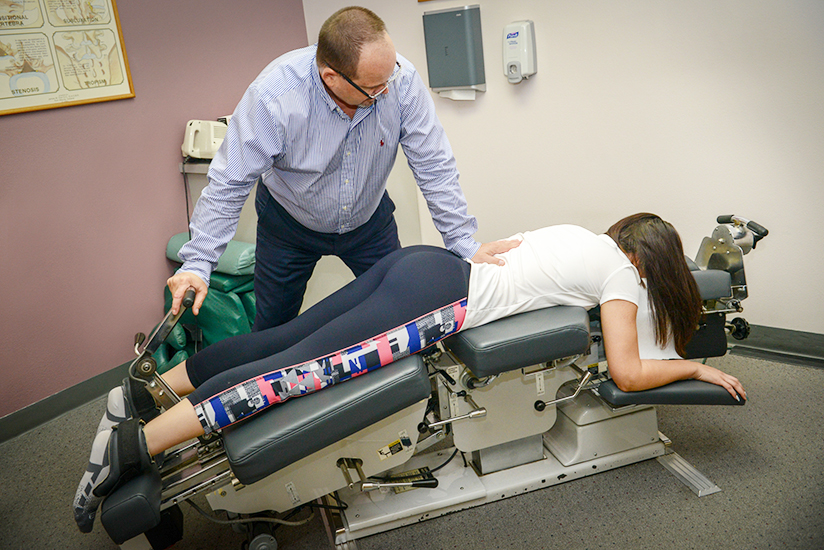
Flexion–distraction is a non-surgical approach used to help relieve low back pain, including back pain accompanied by leg pain (commonly called sciatica). The treatment uses a specialized table that allows the chiropractor to gently distract, or stretch, the spine in a controlled and painless manner. This makes it possible to focus treatment on a specific injured spinal segment.
During the procedure, the spine is gently tractioned by the table. A slow, rhythmic pumping motion is thought to reduce pressure within the disc, allowing the central, soft portion of the disc (the nucleus pulposus) to move away from irritated nerve tissue. This may reduce nerve compression and, in some cases, increase disc height.
Flexion–distraction has been shown to compare favorably with other approaches for treating low back pain and radiculopathy. A study published in the European Spine Journal (online December 8, 2005) found that patients receiving flexion–distraction experienced greater pain relief and higher overall satisfaction than those following an exercise-only program. Pain scores measured using the visual analog scale (VAS) improved by just over 22% in the flexion–distraction group, compared to about 15% in the exercise group.
The study also found that patients with chronic, recurring low back pain tended to respond better to exercise-based care, while patients with acute pain accompanied by leg symptoms responded more favorably to flexion–distraction. In clinical practice, these approaches are often combined, with stabilizing exercises used alongside flexion–distraction to support recovery.







