TL;DR
- The gallbladder stores bile, which is essential for digesting fats and absorbing vitamins A, D, E, and K.
- Biliary stasis (thick, sluggish bile) can reduce fat digestion and lead to symptoms like bloating, reflux, constipation, itching, and pain under the right rib cage.
- Over time, poor bile flow can contribute to nutrient deficiencies and may progress to gallstones.
- Insulin insensitivity and high sugar intake are major contributors to bile thickening and gallbladder dysfunction.
- Supporting bile flow with diet (Roadmap to Health), bitter foods, and targeted supplements may help improve digestion and overall function.
Category 6: Gallbladder
If you took the SymptomQuiz and scored high in this category, you may be having issues with your gallbladder, most likely biliary stasis (thickening of the bile). If the symptoms are particularly severe (especially discomfort under the right rib cage), consider seeing a doctor to rule out gallstones. Biliary stasis can progress to gallstones. Click to download a complete guide to the SymptomQuiz.
Quick cookbook, gallbladder: Follow the Roadmap to Health diet and give a product designed to thin bile. Usually 1-2 tablets (or capsules), 3x/day. Insulin insensitivity is a common cause of bile thickening and the Roadmap to Health will help a lot. Bitter foods, like arugula and dandelion root stimulate digestive enzyme production and bile flow. A good gallbladder supplement will contain artichoke extract. Other constituents may include beet extract, choline, taurine, or silymarin. Avoid supplements that contain ox bile or TUDCA as these can cause problems if you don’t know what you are doing.
Bile and Digestion
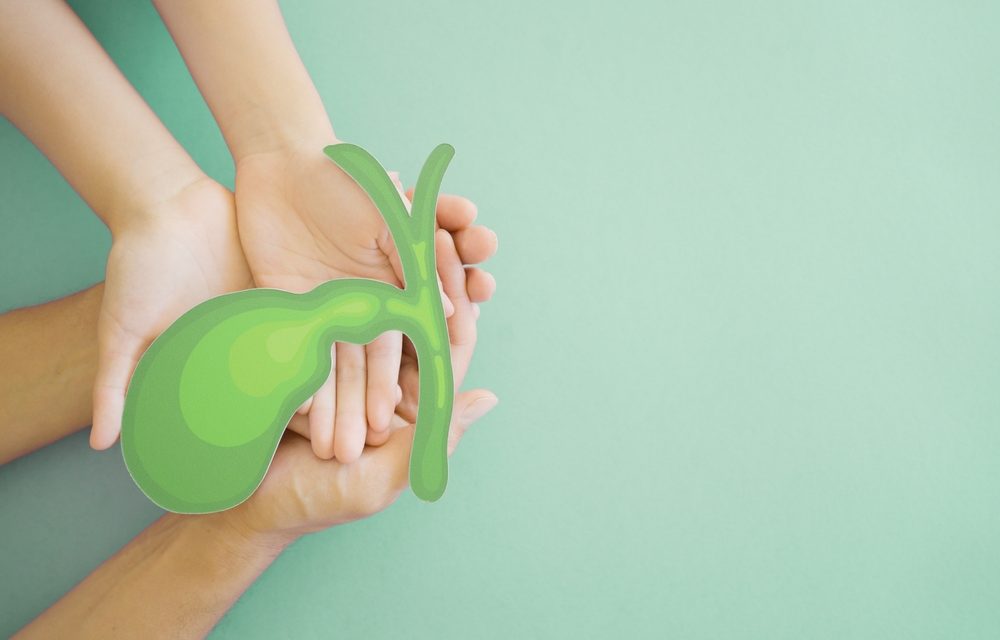
The liver and gallbladder play a role in digestion. The liver produces bile, and the gallbladder stores it. The gallbladder stores bile, which is essential for fat digestion and absorbing vitamins A, D, E, and K. The liver should produce between one and one-and-a-half quarts of bile per day. Sometimes there is not enough bile produced or the bile becomes thick and sluggish. This situation is known as biliary stasis. If biliary stasis is present, bile can back up and cause further damage to the liver.
Problems When Bile Flow Slows Down
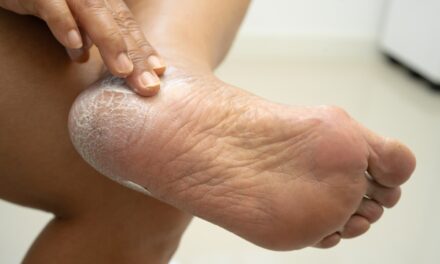
When bile production decreases, the digestion and absorption of fats begin to decrease. Symptoms will begin to appear. These symptoms include itching, pain (under the right rib cage, right shoulder or between the shoulder blades), varicose veins and spider veins, dry or flaking skin, skin peeling at the heels, constipation, and even GERD (gastric reflux). Sometimes the stools will contain fat or be clay-colored. Biliary stasis can also cause nutrient deficiencies in essential fatty acids and oil-soluble vitamins (A, E, D and K)
One just does not suddenly come down with biliary stasis. It has a gradual onset. It is caused by environmental toxins, chemical additives in food, poor eating habits (especially the consumption of sugar and refined foods), dyslipidemia (eg high cholesterol), and insulin insensitivity (pre-diabetes).
Biliary Stasis Can Progress to Gallstones
When things become severe enough, then medicine will recognize the “disease”. But small changes in liver and gallbladder function can gradually lower the amount of bile production. Symptoms will begin to appear and mystify doctors because the “disease” of biliary insufficiency or fatty liver has not appeared yet.
Biliary Stasis in Pregnancy
Some women experience biliary stasis (sluggish bile) during pregnancy. Intrahepatic Cholestasis of Pregnancy (ICP) is a condition in which the normal flow of bile is affected by hormonal changes during pregnancy. Biliary stasis is a functional thickening of the bile—when it gets bad enough, it gets the medical diagnosis, “cholestasis”. Generally, the patient will experience severe itching. She may also have pain in the upper right quadrant of the abdomen. The condition is usually mild. Medical therapy includes a drug called ursodeoxycholic acid, and creams to control itching. The condition can become severe and threaten the fetus. When it is suspected, there should be regular liver function tests, tests for bile acids in the blood and fetal monitoring.
Symptoms of Biliary Stasis May Include:
- Nausea or digestive distress triggered by greasy food.
- Dry skin.
- Itchy skin.
- Clay-colored stools.
- Fat or grease in the stool.
- Gastric reflux that does not respond to other treatment.
- Constipation that does not respond to other treatment.
- Bitter or metallic taste in the mouth.
- Deficiency in essential fatty acids.
- Deficiencies in vitamins A, D, E, and K.
- Pain under the right rib cage.
- Biliary stasis is a possibility in pregnant women with itchy skin.
People with biliary stasis may experience pain over the eyes, pain when pressure is applied to the webbing between the right thumb and forefinger, and pain between the shoulder blades. Biliary stasis can progress to the formation of gallstones. Murphy’s sign, which is when pushing under the right rib cage causes pain (often severe in patients with gallstones), is a good indicator of problems with the liver or gallbladder.
Artichoke Extract
Artichoke Extract is very effective in increasing bile flow (Increase in Choleresis [liver to gall bladder] by means of Artichoke Extract as reported by Kinchhoff and Associates, Phytomedicine (Increase in choleresis by means of artichoke extract Kirchhoff CH, Beckers G.M., Kirchhoff H., Trinczek-Gärtner, O.Petrowicz, H.J. Reimann Phytomedicine Volume 1, Issue 2, September 1994, Pages 107-115) and avoids the use of beets and other foods high in oxalates. The history of artichoke is a perfect example of science finally catching up to the longstanding traditional uses of a medicinal plant. It has traditionally been used for gallstones, to support liver function, and as a liver and gallbladder bile stimulant [1-4]. One author made the following observations [5]:
- Artichoke leaf extract is one of the few phytopharmaceutical drugs whose clinical effects have been confirmed to a great extent by basic biomedical research. In particular, antioxidative, choleretic, anti-cholestatic and hepatoprotective effects as well as inhibition of cholesterol synthesis have been demonstrated.
- The major components responsible for essential effects of the extract have been identified.
- Clinical investigations show that artichoke leaf extract has carminative, spasmolytic and choleretic properties.”
Along with treating biliary stasis [6,7], artichoke extract has been effective for patients with digestive issues like colitis and dyspepsia [8,9]. It is also a powerful antioxidant and is hepatoprotective [9-11]. Some studies even show it to help lower triglycerides and cholesterol [12,13].
Beets
Many supplement companies use beets as the main ingredient for their products addressing biliary stasis. Beets have been researched and found to also have hepatoprotective, antioxidant, and bile thinning ability. Beets, however, are high in oxalates. We are familiar with calcium oxalate kidney stones, but there are other issues.
Oxalates: Oxalic acid or oxalates are very tiny molecules that bind minerals like calcium and form crystals. Oxalate is a highly reactive compound that is attracted to positively charged minerals. Some people do not tolerate oxalates well.
In certain individuals, oxalates not only can cause kidney stones (calcium oxalate kidney stones) but also may be responsible for a wide variety of other health problems related to inflammation, auto-immunity, mitochondrial dysfunction, mineral balance, connective tissue integrity, urinary tract issues and poor gut function. It is controversial, but some practitioners have linked these problems to people who have “leaky gut”. Oxalates have even caused cancer in animal studies [14].
Having a damaged gut lining will increase your absorption of oxalates. This may be the issue for the patient who says, “I don’t understand it; I eat perfectly but have all these health problems.” It is estimated that this is a problem for about 12% of the population; one study suggests that it might even be higher [15].
Good gut health can prevent these issues. Studies have shown that good bowel bacteria can prevent the formation of oxalate crystals [15,16].
Insulin Insensitivity: A Major Cause of Fatty Liver & Biliary Stasis
Insulin insensitivity is linked to fatty liver and biliary stasis. Fatty liver can progress to cirrhosis of the liver. Eating sugar can cause insulin insensitivity and it can progress to serious problems with the liver and gallbladder. One study linked insulin insensitivity and sugar consumption to gallstones and even cancer [17]. Many studies have found that eating sugar and developing insulin insensitivity causes problems with the liver and gallbladder [18-21].
An A1C between 5.7 and 6.4 percent indicates prediabetes (insulin resistance). An A1C level of 6.5 percent or higher on two separate tests indicates diabetes. If your biliary stasis patient also has insulin insensitivity, do the following:
- First, have a doctor rule out gallstones.
- Do regular light exercise.
- Follow the Roadmap to Health diet, or at least avoid foods with a glycemic load greater than 10 (download a list at DrVarnas.com)
- Berberine (500 mg), 3x/day.
- Flax oil capsules, 2-4, 3x/day. Fish oil is commonly used here, but you really need to trust your source and fish oil should not be taken long term.
- Try a product designed to thin bile (1-2 tablets or capsules, 3x/day). Beta TCP (Biotics); AF Betafood (Standard Process); GB Complete (Zorex). The first two are made with beets, the 3rd is artichoke-based. Other companies make similar products.
More for Biliary Stasis
Poor bile production causes poor absorption of essential fatty acids and fat-soluble nutrients (vitamins A, D, E, and K). The earliest symptom is usually itching. Pain (upper right quadrant, right shoulder or between the shoulder blades), varicosities and spider veins, dry or flaking skin, skin peeling at the heels, deficiencies in oil-soluble nutrients, constipation, and even GERD (gastric reflux) can be the result of biliary stasis. Biliary stasis is very common in patients with insulin insensitivity.
Bile salts: It is common to give these to patients who have had gallbladder surgery to help digest and absorb fats and oil-soluble nutrients. Standard Process makes Cholacol and Biotics make Betacol, both of which are bile salt products.
Some practitioners give it to patients who are not producing enough bile. Be careful here, bile salts can cause a biliary colic with severe upper right quadrant pain. Also, giving a patient bile salts can prevent them from producing their own bile salts. If you have had your gallbladder removed, taking bile salts with every meal is not a bad idea. You need it to digest fats, oils, and oil-soluble vitamins.
Taurine: Taurine is a sulfur-containing amino acid. Taurine is a conditionally essential amino acid; meaning that it can be produced by the body. It is formed from cysteine. Cysteine comes from methionine. Methionine becomes cysteine, with homocysteine as an intermediate. Taurine is essential for the formation of bile salts; it also functions as an antioxidant.
Selected References
- Przegl Lek 2012;69(10):1129-31 Artichoke–untapped Potential of Herbal Medicine in the Treatment of Atherosclerosis and Liver Diseases
- Phytomedicine 1997;4(4):369-378 Artichoke leaf extract – Recent findings reflecting effects on lipid metabolism, liver and gastrointestinal tracts
- Phytomedicine 2002 Dec; 9(8): 687-93 Choleretic activity and biliary elimination of lipids and bile acids induced by an artichoke leaf extract in rats
- Sci. Monit. 2001; (7) Suppl. 1: 316-20 Anticholestatic activity of flavonoids from artichoke (Cynara scolymus L.) and of their metabolites
- Phytomedicine Vol. 4 (4), pp.369-378,1997 Artichoke leaf extract – Recent findings reflecting effects on lipid metabolism, liver and gastrointestinal tracts
- Med Sci Monit. 2001 May;7 Suppl 1:316-20 Anticholestatic activity of flavonoids from artichoke (Cynara scolymus L.) and of their metabolites
- June 2005 Acta Horticulturae 681(681):429-436 Choleretic and anticholestatic activities of flavonoids of artichoke
- Aliment Pharmacol Ther. 2003 Dec;18(11-12):1099-105 Efficacy of artichoke leaf extract in the treatment of patients with functional dyspepsia: a six-week placebo-controlled, double-blind, multicentre trial
- Minerva Gastroenterol Dietol. 2010 Jun;56(2):93-9 Phytotherapy with a mixture of dry extracts with hepato-protective effects containing artichoke leaves in the management of functional dyspepsia symptoms
- Int J Sport Nutr Exerc Metab. 2008 Jun;18(3):313-27 The influence of supplementation with artichoke (Cynara scolymus L.) extract on selected redox parameters in rowers
- Case Reports Hepatol. 2014; 2014: 697359 The possible efficacy of artichoke in fluconazole related hepatotoxicity
- Phytomedicine Vol. 4 (4), pp.369-378,1997 Artichoke leaf extract – Recent findings reflecting effects on lipid metabolism, liver and gastrointestinal tracts
- Crit Rev Food Sci Nutr. 2018;58(15):2549-2556 Lipid-lowering activity of artichoke extracts: A systematic review and meta-analysis
- BMC Cancer. 2015 Oct 22;15:761 Oxalate induces breast cancer
- Ann Transl Med. 2017 Jan;5(2):36 Gut microbiota and oxalate homeostasis
- Microb Pathog. 2017 Aug;109:287-291 Role of gut microbiota against calcium oxalate
- Br J Cancer. 2011 Oct 25;105(9):1424-9 Metabolic syndrome and insulin resistance in relation to biliary tract cancer and stone risks: a population-based study in Shanghai, China
- Carcinogenesis 2008 May;29(5):944-8 Polymorphism of genes related to insulin sensitivity and the risk of biliary tract cancer and biliary stone: a population-based case-control study in Shanghai, China
- Ann Oncol. 2013 Sep;24(9):2449-55 Diabetes mellitus, insulin treatment, diabetes duration, and risk of biliary tract cancer and hepatocellular carcinoma in a European cohort
- J Hepatol. 2001 Nov;35(5):550-7 Insulin injections enhance cholesterol gallstone incidence by changing the biliary cholesterol saturation index and apo A-I concentration in hamsters fed a lithogenic diet
- Nutrients 2013 May 10;5(5):1544-60). Non-alcoholic fatty liver disease (NAFLD) and its connection with insulin resistance, dyslipidemia, atherosclerosis and coronary heart disease