
TL;DR
- Glutathione is the body’s master antioxidant and is essential for detoxification.
- Low glutathione levels are linked with aging, cognitive decline, metabolic disease, immune dysfunction, and chronic inflammation.
- When glutathione is depleted, detoxification slows and oxidative stress increases.
- Supporting glutathione production may help improve resilience across multiple body systems.
If you are tired, have brain fog, allergies, autoimmune problems, or chronic inflammation, your ability to detoxify matters. At the center of that system is one molecule: glutathione.
What Is Glutathione?
Glutathione: The Key to Phase II Detoxification
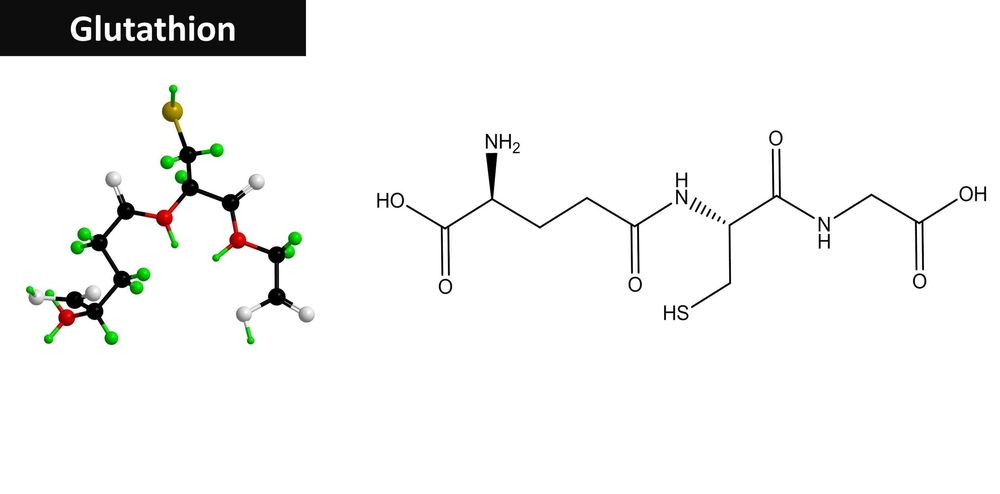
Glutathione is a small molecule made from three amino acids—glutamate, cysteine, and glycine. It is synthesized inside the body’s cells, primarily in the liver. From three amino acids: glutamate (glutamic acid), cysteine, and glycine. The production process happens in two main enzymatic steps, requiring ATP (energy), and it serves as the body’s master antioxidant, helping with detoxification and cell protection.
Glutathione must be used, recycled, and rebuilt—constantly.
If that cycle slows down, detoxification becomes less efficient and oxidative stress can increase.
Why Glutathione Matters
We need to get rid of toxins. The inability to do so can result in real-world symptoms–even disease. Studies have linked good health to good glutathione status and many conditions to poor glutathione status.
- Aging: High blood glutathione levels accompany excellent physical and mental health in women ages 60 to 103 years [1,2].
- Neurological Health: The brain and nervous system are especially vulnerable to toxins. Poor glutathione status creates problems in dealing with oxidative stress and inflammation. Click here to read more about the vulnerability of the nervous system to inflammation. It is linked to Alzheimer’s disease, poor cognition, mental health issues, Parkinson’s disease, MS, and neurodegneration in general [3-7].
- Chronic Liver Disease: Glutathione levels are lower in people with hepatitis B and C [8].
- Viral Infections: This work identifies 2 novel findings in older HIV-infected patients: 1) diminished synthesis due to decreased availability of cysteine and glycine contributes to GSH deficiency and can be rapidly corrected by dietary supplementation of these precursors and 2) correction of GSH deficiency is associated with improvement of mitochondrial fat and carbohydrate oxidation in both fasted and fed states and with improvements in insulin sensitivity, body composition, and muscle strength. The role of GSH on ameliorating metabolic complications in older HIV-infected patients warrants further investigation [9]. Studies have shown that supplementing to boost GSH can protect against viruses as well as oxidative stress produced by infection [10,11].
- Diabetes: Oxidative stress and inflammation are major issues for diabetics. What is interesting is that glutathione also helps with insulin sensitivity [12,13].
The Takeaway
Glutathione is not tied to one specific disease—it reflects how well your body handles stress, toxins, and inflammation. When levels are low, problems can appear in many different systems, from the brain to the immune system to metabolism.
Supporting glutathione production is one of the simplest ways to improve your body’s resilience and ability to function.
Selected References
- J Lab. Clin. Med. 2002;140:413–417. Glutathione dysregulation and the etiology and progression of human diseases.
- The emerging role of glutathione in Alzheimer’s disease. J. Alzheimers Dis. 2014;40:519–529.
- Biochem. 2017;529:127–143. Glutathione in the human brain: Review of its roles and measurement by magnetic resonance spectroscopy
- Reduction of plasma glutathione in psychosis associated with schizophrenia and bipolar disorder in translational psychiatry. Transl. Psychiatry. 2017;7:e1215.
- Glutathione in multiple sclerosis: More than just an antioxidant? Mult. Scler. 2014;20:1425–1431.
- Int. J. Mol. Sci. 2013;14:21021–21044. Repeated-dose oral N-Acetylcysteine in Parkinson’s disease
- Selenium, glutathione and glutathione peroxidases in blood of patients with chronic liver diseases. Acta Biochim. Pol. 2003;50:1147–1154.
- Effect of increasing glutathione with cysteine and glycine supplementation on mitochondrial fuel oxidation, insulin sensitivity, and body composition in older HIV-infected patients. J. Clin. Endocrinol. Metab. 2014;99:169–177.
- Free Radical Biology and Medicine Volume 34, Issue 7, 1 April 2003, Pages 928-936 Inhibition of influenza infection by glutathione
- Front Microbiol. 2022 Oct 6;13:979719. Glutathione deficiency in the pathogenesis of SARS-CoV-2 infection and its effects upon the host immune response in severe COVID-19 disease
- l-Cysteine supplementation increases insulin sensitivity mediated by upregulation of GSH and adiponectin in high glucose treated 3T3-L1 adipocytes. Arch. Biochem. Biophys. 2017;630:54–65.
- Glutathione synthesis is diminished in patients with uncontrolled diabetes and restored by dietary supplementation with cysteine and glycine. Diabetes Care. 2011;34:162–167.







