TL;DR:
- Reishi mushroom has been used for 2,000+ years to support wellness and longevity
- Compounds in reishi may help immunity, inflammation, antioxidant defenses, and liver health
- Most strong evidence comes from lab and animal research — human studies are still limited.
Other mushrooms have also been studied for their health benefits.
What Is Reishi Mushroom?
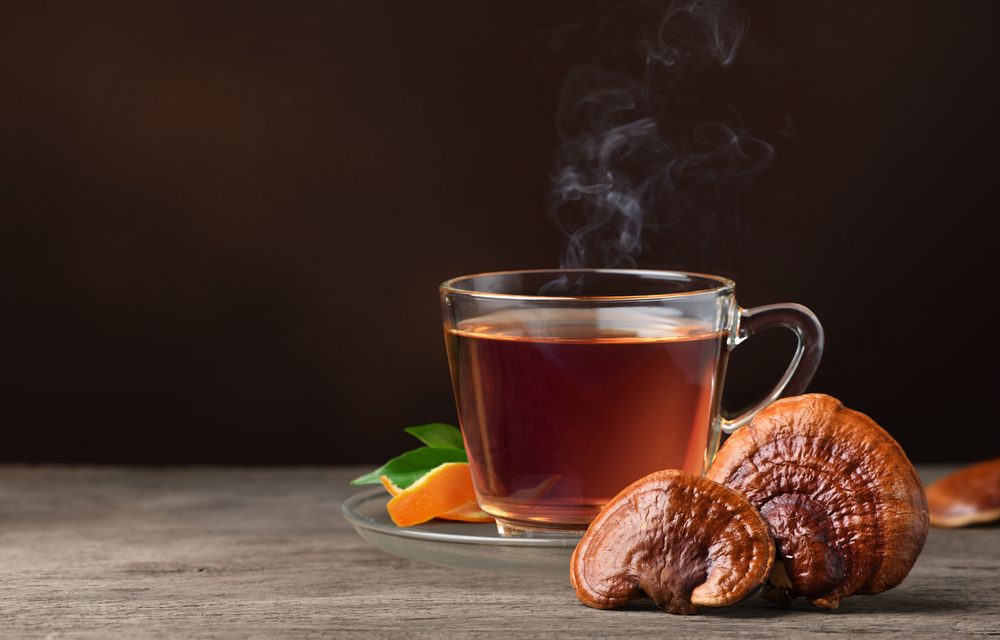
Reishi mushroom, also called lingzhi, has been used in traditional Chinese medicine for over 2,000 years. It is known as the “mushroom of immortality” and is linked with health, long life, and spiritual strength.
Reishi contains three main groups of helpful compounds:
Polysaccharides: Immune & Inflammation Support
These are natural sugars found in reishi. Research shows they can help:
• support the immune system
• reduce inflammation
• protect the stomach
• help balance blood sugar
• may help the body fight tumors¹–⁶
Peptidoglycans: Antiviral & Antioxidant Effects
These are proteins with sugars attached. Different types have been found in reishi.
Studies show they may:
• boost immune function
• reduce inflammation
• provide antioxidant benefits
• have antiviral activity against certain viruses⁷–¹¹
Triterpenes: Antioxidants & Heart Support
These give reishi its bitter taste.
They may help:
• protect the liver
• lower cholesterol
• act as antioxidants¹²–¹⁴
Reishi for Immune Support & Cancer Research
Reishi is commonly used as a supplement for immune support.
There are many lab and animal studies showing it may:
• help the body fight cancer cells¹⁵–²¹
• slow tumor growth
• reduce the spread of cancer in animals
Some clinical trials in people with late-stage cancer found:
• better immune markers
• stronger natural killer (NK) cell activity²²–²³
More studies in humans are needed, but results so far are encouraging.
Antiviral & Antibacterial Research
Studies show reishi extracts may help the body defend against:
• HIV enzymes²⁸–²⁹
• hepatitis B virus³⁰
• herpes viruses³¹
• harmful bacteria like E. coli³²
Liver Protection
Animal research suggests reishi may protect the liver from damage³³–³⁴.
Summary Box
Reishi mushroom has been studied for immune support, inflammation, antiviral effects, liver protection, and cancer-related benefits. Most strong evidence so far comes from lab and animal studies — more human studies are needed.
Educational only — not medical advice.
Work with a doctor trained in natural healthcare for personalized guidance.
References:
The information on the reishi mushroom was obtained from Herbal Medicine: Biomolecular and Clinical Aspects. 2nd edition. By Sissi Wachtel-Galor, John Yuen, John A. Buswell, and Iris F. F. Benzie. Find the book for more detailed information and a more complete list of studies.
- Studies on fungal polysaccharides. XXVII. Structural examination of a water-soluble, antitumor polysaccharide of Ganoderma lucidum. Chem Pharm Bull. 1981;29:3611–16.
- Isolation and hypoglycemic activity of ganoderans A and B, glycans of Ganoderma lucidum fruit bodies. Planata Med. 1985;4:339–40.
- Glycan structures of ganoderans B and C, hypoglycemic glycans of Ganoderma lucidum fruit bodies. Phytochemistry. 1986;25:2817–20.
- Structural and immunological studies of a major polysaccharide from spores of Ganoderma lucidum (Fr.) Karst. Carbohydr Res. 2001;332:67–74.
- Lingzhi polyphorous fungus. In: Herbal and Traditional Medicine: Molecular Aspects of Health. New York: Marcel Dekker Inc; 2004. pp. 179–228.
- Lingzhi polyphorous fungus. In: Herbal and Traditional Medicine: Molecular Aspects of Health. New York: Marcel Dekker Inc; 2004. pp. 179–228.
- Possible mechanism underlying the antiherpetic activity of a proteoglycan isolated from the mycelia of Ganoderma lucidum in vitro. J Biochem Mol Biol. 2005;38(1):34–40.
- A new class of natural glycopeptides with sugar moiety-dependent antioxidant activities derived from Ganoderma lucidum fruiting bodies. J Proteome Res. 2009;8:436–42.
- Ganoderma lucidum polysaccharide peptide reduced the production of proinflammatory cytokines in activated rheumatoid synovial fibroblast. Mol Cell Biochem. 2007;301:173–9.
- Immunomodulation of RAW264.7 macrophages by GLIS, a proteopolysaccharide from Ganoderma lucidum. J Ethnopharmacol. 2007;112:445–50.
- Polysaccharides of Ganoderma lucidum alter cell immunophenotypic expression and enhance CD56+ NK-cell cytotoxicity in cord blood. Bioorg Med Chem. 2004;12:5603–9.
- Mahato S. B, Sen S. Advances in triterpenoid research, 1990-1994. Phytochemistry. 1997;44:1185–236.
- Herbal medicine for the treatment of cardiovascular disease: Clinical considerations. Arch Intern Med. 1998;158:2225–34.
- Biosynthesis of triterpenoid saponins in plants. Adv Biochem Eng Biotechnol. 2002;75:31–49.
- The dual roles of Ganoderma antioxidants on urothelial cell DNA under carcinogenic attack. J Ethnopharmacol. 2008;118:324–30.
- Medicinal mushroom modulators of molecular targets as cancer therapeutics. Appl Microbiol Biotechnol. 2005;67:453–68.
- Triterpenes from the spores of Ganoderma lucidum and their cytotoxicity against meth-A and LLC tumor cells. Chem Pharm Bull. 2000;48:1026–33.
- Cytotoxic activity of methanol extracts from Basidiomycete mushrooms on murine cancer cell lines. Pharmazie. 2004;59:290–3.
- Ganoderma lucidum causes apoptosis in leukemia, lymphoma and multiple myeloma cells. Leuk Res. 2006;30:841–8.
- Inhibitory effects of Ganoderma lucidum on tumorigenesis and metastasis of human hepatoma cells in cells and animal models. J Agric Food Chem. 2009;57:5049–57.
- .Inhibitory effects of Ganoderma lucidum on tumorigenesis and metastasis of human hepatoma cells in cells and animal models. J Agric Food Chem. 2009;57:5049–57.
- A randomized, placebo-controlled, multi-center study of Ganoderma lucidum (W. Curt.: Fr.) Lloyd (Aphyllophoromycetideae) polysaccharides (Ganopoly) in patients with advanced lung cancer. Int J Med Mushrooms. 2003;5:368–81.
- Effects of Ganopoly (a Ganoderma lucidum polysaccharide extract) on immune functions in advanced-stage cancer patients. Immunol Invest. 2003;32:201–15.
- Structural and immunological studies of a major polysaccharide from spores of Ganoderma lucidum (Fr.) Karst. Carbohydr Res. 2001;332:67–74.
- Regulation on maturation and function of dendritic cells by Ganoderma lucidum polysaccharides. Immunol Lett. 2002;83:163–9.
- Ganoderma lucidum polysaccharides enhance the function of immunological effector cells in immunosuppressed mice. J Ethnopharmacol. 2007;111:219–26.
- Differential protein expression in mouse splenic mononuclear cells treated with polysaccharides from spores of Ganoderma lucidum. Phytomedicine. 2008;15:268–76.
- Anti-HIV-1 and anti-HIV-1-protease substances from Ganoderma lucidum. Phytochemistry. 1998;49:1651–7.
- Triterpenes from the spores of Ganoderma lucidum and their inhibitory activity against HIV-1 protease. Chem Pharm Bull. 1998;46:1607–12.
- Anti-hepatitis B activities of ganoderic acid from Ganoderma lucidum. Biotechnol Lett. 2006;28(11):837–41.
- Herbal mixtures containing the mushroom Ganoderma lucidum improve recovery time in patients with herpes genitalis and labialis. J Altern Complement Med. 2007;13:985–7.
- Ohno N, Miura N. N, Sugawara N, Tokunaka K, Kirigaya N, Yadomae T. Immunomodulation by hot water and ethanol extracts of Ganoderma lucidum. Pharm Pharmacol Lett. 1998;4:174–7.
- Radical scavenger and antihepatotoxic activity of Ganoderma formosanum, Ganodermalucidum and Ganoderma neo-japonicum. J Ethnopharmacol. 1995;47:33–41.
- β-Glucuronidase-inhibitory activity and hepatoprotective effect of Ganoderma lucidum. Biol Pharm Bull. 1999;22:162–4.