Why Pumpkin Seed Oil for Prostate?
Pumpkin seed oil may help men with enlarged prostate symptoms (BPH). Research suggests it may improve urinary symptoms and quality of life without some of the side effects associated with prostate medications [7,8,9,13].
Pumpkin Seed Oil and Prostate Studies
In one study, pumpkin seed oil was compared to the drug tamsulosin in men with BPH [7]. During the first three months, the men taking pumpkin seed oil had better symptom improvement than the men taking the drug. The pumpkin seed oil group also avoided side effects like dizziness, headache, retrograde ejaculation, and skin irritation that occurred in the medication group.
Other studies have also shown improvement in urinary symptoms and quality of life in men with prostate enlargement [8,9,13].
Why Might Pumpkin Seed Oil Help?
Pumpkin seed oil contains plant compounds called polyphenols and phytosterols. These compounds have antioxidant and anti-inflammatory effects and may help support normal prostate function [1-6,12].
Animal studies suggest pumpkin seed oil may help reduce prostate enlargement and influence hormone-related pathways involved in BPH [10,12].
Pumpkin seed oil may also have broader health benefits. Diets rich in plant polyphenols have been associated with lower rates of cardiovascular disease, diabetes, some cancers, and neurodegenerative disease [1-6].
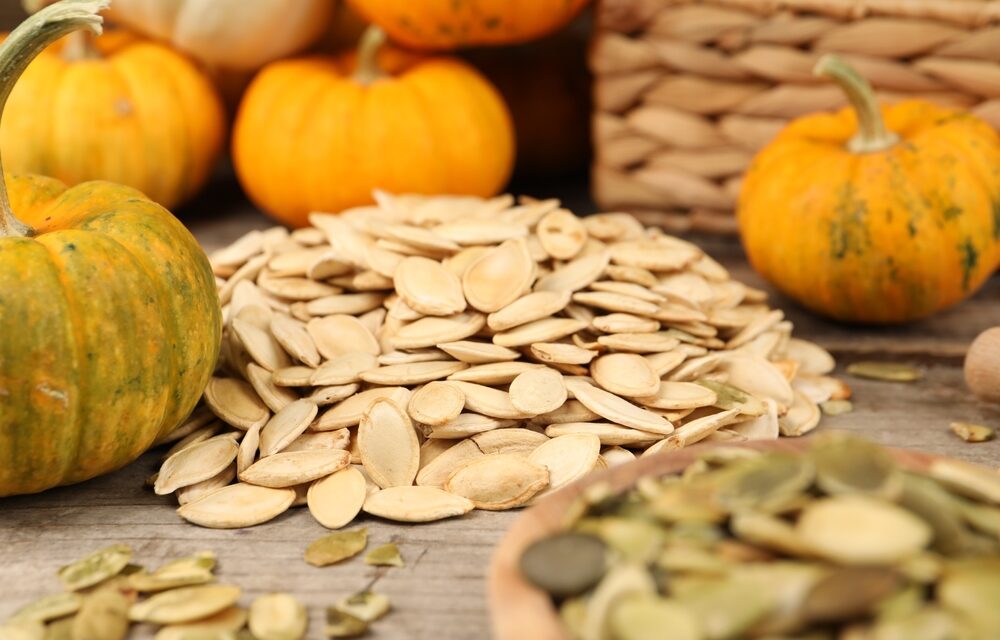
Eat the Seeds
Pumpkin seeds also contain lignans, plant compounds that may help support prostate health and hormone balance. [13]
Try This
Typical doses of pumpkin seed oil range from 1000–2000 mg, taken three times daily.
Chronic inflammation may play an important role in BPH. Following an anti-inflammatory diet high in colorful plant foods may also help support prostate and cardiovascular health. Following an anti-inflammatory diet high in colorful plant foods may also help support prostate and cardiovascular health. Consider following the Roadmap to Health.
Educational only — not medical advice.
Related Articles:
Selected References
- Am J Clin Nutr. 2005 Jan;81(1 Suppl):317S‐325S. Polyphenols and disease risk in epidemiologic studies
- J Med Food. 2005 Fall;8(3):281‐90. Flavonols, flavones, flavanones, and human health: epidemiological evidence
- J Physiol Pharmacol. 2001 Sep;52(3):483‐8. Intracellular reduced glutathione content in normal and type 2 diabetic erythrocytes: effect of insulin and (-)epicatechin
- Neurology. 2007 Sep 11;69(11):1084‐93 Mediterranean diet and Alzheimer disease mortality
- Annu Rev Nutr. 2001;21:381‐406. Inhibition of carcinogenesis by dietary polyphenolic compounds
- Cancer Lett. 2008 Oct 8;269(2):269‐80. Multitargeted cancer prevention by quercetin
- BMC Urol. 2021 Oct 19;21(1):147. Pumpkin seed oil (Cucurbita pepo) versus tamsulosin for benign prostatic hyperplasia symptom relief: a single-blind randomized clinical trial
- Urol Int. 2015;94(3):286-95. Effects of pumpkin seed in men with lower urinary tract symptoms due to benign prostatic hyperplasia in the one-year, randomized, placebo-controlled GRANU study
- Nutr Res Pract. 2009 Winter;3(4):323-327. Effects of pumpkin seed oil and saw palmetto oil in Korean men with symptomatic benign prostatic hyperplasia
- J Med Food. 2006;9:284-288. Inhibition of testosterone-induced hyperplasia of the prostate of Sprague-Dawley rats by pumpkin seed oil
- Fitoterapia. 2016 Apr;110:150-156. Pumpkin seed extract: Cell growth inhibition of hyperplastic and cancer cells, independent of steroid hormone receptors
- Food Nutr Res. 2021 Dec 2;65. Phytosterols in hull-less pumpkin seed oil, rich in ∆7-phytosterols, ameliorate benign prostatic hyperplasia by lowering 5α-reductase and regulating balance between cell proliferation and apoptosis in rats
- J Med Food. 2019;22(6). Effects of an Oil-Free Hydroethanolic Pumpkin Seed Extract on Symptom Frequency and Severity in Men with Benign Prostatic Hyperplasia: A Pilot Study in Humans