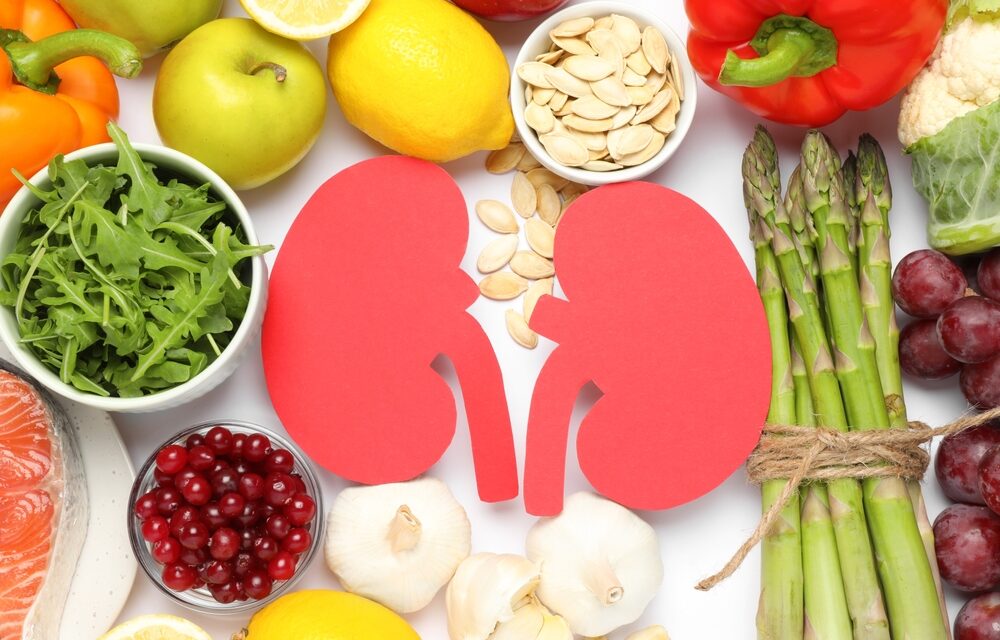
The National Kidney Foundation offers very sound advice for protecting your kidneys. This includes controlling your blood pressure, managing blood sugar, eat a balanced diet, stay active, avoid smoking, limiting alcohol, and stay hydrated. This information is meant to augment that advice, not replace it.
Although taking herbs and other supplements is discouraged, there are things you can do that go beyond the commonsense advice presented above.
Talk to your doctor first: These are just some ideas for you to share with your doctor and not encouragement to self-treat. This is especially important for kidney disease, which is kind of a balancing act.
#1 Berberine and Chronic Kidney Disease
Berberine can help balance the microbiome (see below), reduce inflammation, and help with insulin insensitivity. It inhibits uremic toxins produced by the microbiome [1]. Berberine has been studied and shown to specifically reduce inflammation in kidney tissue [2].
#2 Fish Oil and Chronic Kidney Disease
Fish oil, rich in omega-3 fatty acids (EPA and DHA), is widely studied for its kidney-protective properties, primarily through reducing systemic inflammation and lowering cardiovascular disease risk [3,4]. It is especially good for patients with IgA nephropathy and lupus nephritis. [3]. Supplementation with fish oil has even reduced the incidence of cardiovascular events in dialysis patients [5]. Fish oil supplementation can also reduce the incidence of kidney stones in patients with that tendency [6].
#3 Polyphenols, Carotenoids, and Chronic Kidney Disease
Polyphenols and carotenoids are natural antioxidant compounds found in vegetables, fruits, herbs, spices, tea, and other plant foods. Researchers often study specific compounds such as quercetin, hesperidin, anthocyanins, resveratrol, lycopene, or beta-carotene. Although these substances have different chemical structures and biological effects, they share many important functions, including reducing oxidative stress, helping control inflammation, supporting circulation, and protecting tissues from damage. For this reason, a diet rich in colorful plant foods is associated with better long-term health outcomes, including improved kidney health. This is supported by studies.
- Carotenoids are associated with a lower risk of chronic kidney disease (CKD), slower kidney function decline, and reduced mortality rates among existing CKD patients [7]. A higher serum carotenoid levels, reflective of a fruit- and vegetable-rich dietary pattern is inversely related to kidney disease [14].
- Bioflavonoids offer significant protective benefits for kidney health by lowering inflammation and reducing oxidative stress. Studies show that eating foods high in bioflavonoids can reduce the risk of kidney disease as well as lower mortality in those who have it [8-10].
- Polyphenols protect against mitochondrial damage. Mitochondria have emerged as an important target for interventions aiming at preventing or improving the treatment of complications in CKD [11-13]. Certain polyphenols (like anthocyanins and resveratrol) help balance gut bacteria, which reduces the production of uremic toxins that can worsen CKD [15].
Note: You may see research supporting the use of a single carotenoid or polyphenol beneficial to kidney function (hesperidin comes to mind). For the most part, the research supports the idea of getting these antioxidants directly from fresh produce and vegetable juices. Most of the time, carotenoids or polyphenol supplements are discouraged.
#4 CoQ10 and Kidney Disease
Coenzyme Q10 (CoQ10) is a potent antioxidant often evaluated for its potential to reduce oxidative stress and preserve mitochondrial function, both of which are critical in managing chronic kidney disease [16,17].
CoQ10 is vital to the mitochondria, and the mitochondria are vital to kidney health. The kidneys are the second most energy-demanding organs in the body. They consume massive amounts of energy to filter blood, balance electrolytes, and remove waste [18]. Read more about CoQ10 and the kidneys.
#5 Chronic Kidney Disease and the Gut-Kidney Axis
Research reveals a bidirectional “gut-kidney axis”. Kidney dysfunction alters the gut microbiome through urea buildup and colon inflammation, while this resulting bacterial imbalance (dysbiosis) pumps harmful, kidney-damaging toxins back into the blood, accelerating disease progression. Studies have shown that addressing the microbiome can ultimately help CKD [19,20].
Vegetable fiber, polyphenols from fresh produce, and probiotics all can help to ensure a healthy microbiome. All have been studied and found to be beneficial to kidney health as well.
- Fiber: Dietary fiber benefits Chronic Kidney Disease (CKD) by reducing systemic inflammation, lowering blood sugar, and modulating gut bacteria to reduce harmful uremic toxins [21,22]. Modified Citrus Pectin (MCP) is a soluble dietary fiber derived from citrus peels that is being heavily researched as a potential complementary therapy for Chronic Kidney Disease (CKD) [24].
- Probiotics: Emerging scientific research shows they can support the management of chronic kidney disease through the gut-kidney axis. Targeted probiotics can introduce beneficial bacteria to consume these toxic wastes directly in the intestines, helping to lighten the filtration burden placed on the remaining kidney tissue [23].
- Berberine: One of the strengths of berberine is that it can kill harmful bacteria and leave desirable bacteria alone.
Possible Strategies for CKD:
TALK TO YOUR DOCTOR FIRST: It is impossible to come up with a “one size fits all” plan for kidney disease. The drugs you are on, the severity of the disease and other issues will all make a difference. As much sense as eating vegetables makes, some people do not do well with oxalates, so spinach, beets, and several other vegetables may not be desirable. Juicing is a great way to get polyphenols and carotenoids, but if you overdo it, you may be getting too much potassium. Berberine, CoQ10, and fish oil all show promise. CoQ10 and fish oil may affect blood clotting, so taking them may interfere with certain medications. You get the idea—your doctor knows you. Run these ideas by him or her.
I like the idea of juicing as a way to get antioxidants from vegetables. This is even mentioned by the kidney society (check with your doctor about how much juice and which vegetables you should be juicing). The downside of juicing is the loss of much of the fiber found in whole vegetables. One way to partially address this is by adding a soluble fiber such as citrus pectin.
Selected References:
- Acta Pharm Sin B. 2022 Dec 20;13(4):1537–1553. Berberine ameliorates chronic kidney disease through inhibiting the production of gut-derived uremic toxins in the gut microbiota
- Pharmacological Research Volume 185, November 2022, 106481 Protective effect of berberine in diabetic nephropathy: A systematic review and meta-analysis revealing the mechanism of action
- Curr Pharm Des. 2009;15(36):4149–4156. Omega-3 and Renal Function in Older Adults
- 2022 Dec 21;15(1):22. Habitual Fish Oil Supplementation and Incident Chronic Kidney Disease in the UK Biobank
- N Engl J Med 2026;394:128-137 Fish-Oil Supplementation and Cardiovascular Events in Patients Receiving Hemodialysis
- Journal of Clinical Lipidology Volume 18, Issue 1, January–February 2024, Pages e116-e124 Habitual fish oil supplementation, genetic susceptibility of kidney stones and the risk of new-onset kidney stones
- Front Med (Lausanne). 2022 Jul 8;9:871767. Relation Between Dietary Carotenoid Intake, Serum Concentration, and Mortality Risk of CKD Patients Among US Adults: National Health and Nutrition Examination Survey 2001–2014
- PLoS One. 2024 Aug 27;19(8):e0309026. Association between dietary intake of flavonoid and chronic kidney disease in US adults: Evidence from NHANES 2007-2008, 2009-2010, and 2017-2018
- Clinical Nutrition Volume 51p126-135August 2025 A flavonoid-rich diet is associated with a lower risk of chronic kidney disease: A prospective cohort study
- 2022 Apr 6;27(7):2365. Flavonoids in Treatment of Chronic Kidney Disease
- 2022 Jul 29;14(15):3115. The Effect of Polyphenols on Kidney Disease: Targeting Mitochondria
- Bioactive food and exercise in chronic kidney disease: Targeting the mitochondria. Eur. J. Clin. Investig. 2018;48:e13020.
- 2022 Apr 6;11(7):1060. Polyphenols and Their Metabolites in Renal Diseases: An Overview
- J Ren Nutr. 2019 Jan;29(1):65-73. The Association of Serum Carotenoids, Tocopherols, and Ascorbic Acid With Rapid Kidney Function Decline: The Coronary Artery Risk Development in Young Adults (CARDIA) Study
- Immunol., 07 January 2020 Volume 10 – 2019 The Regulation of Host Intestinal Microbiota by Polyphenols in the Development and Prevention of Chronic Kidney Disease
- Kidney International Volume 102, Issue 3, September 2022, Pages 604-612 Oral Coenzyme Q10 supplementation leads to better preservation of kidney function in steroid-resistant nephrotic syndrome due to primary Coenzyme Q10 deficiency
- Curr Pharm Des. 2018;24(31):3710-3723. The Effects of Coenzyme Q10 Supplementation on Metabolic Profiles of Patients with Chronic Kidney Disease: A Systematic Review and Meta-analysis of Randomized Controlled Trials
- Kidney International Volume 92, Issue 5, November 2017, Pages 1051-1057 The hallmarks of mitochondrial dysfunction in chronic kidney disease
- Am J Physiol Renal Physiol. 2019 Mar 13;316(6):F1211–F1217 Chronic kidney disease and the gut microbiome
- Pediatr Nephrol. 2016 Apr 29;32(6):921–931 Gut microbiome and kidney disease: a bidirectional relationship
- 2022 Oct 21;14(20):4419. Fibre Intake in Chronic Kidney Disease: What Fibre Should We Recommend?
- Journal of Renal Nutrition Volume 32, Issue 6e1-e4November 2022 The Benefits of Fiber in Chronic Kidney Disease
- J Agric Food Chem. 2024 Apr 4;72(15):8347–8364. Exploring the Preventive and Therapeutic Mechanisms of Probiotics in Chronic Kidney Disease through the Gut–Kidney Axis
- PLOS One Published: April 8, 2011 https://doi.org/10.1371/journal.pone.0018683 Modified Citrus Pectin Reduces Galectin-3 Expression and Disease Severity in Experimental Acute Kidney Injury