
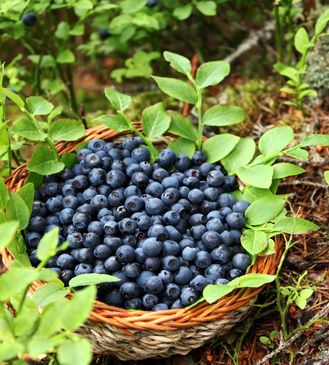
Research published in the Journal of Agricultural and Food Chemistry (Vol. 56, No. 3; February 13, 2008; e-published ahead of print) examined whether bilberry extract might help protect kidney tissue from chemically induced damage.
In this animal study, mice were exposed to potassium bromate (KBrO₃), a dough-improving additive used in bread making. Potassium bromate is known to be toxic and has been linked in experimental settings to kidney injury and hearing loss. The dose used in this study was sufficient to induce measurable kidney damage.
Alongside the chemical exposure, the mice received an anthocyanin-enriched bilberry extract at doses of 50, 100, or 200 mg/kg for five days. After treatment, the mice showed a normalization of blood urea nitrogen (BUN) and creatinine levels, two laboratory markers commonly used to assess kidney function.
The bilberry extract also reduced several markers associated with oxidative stress and tissue injury, including malondialdehyde, nitric oxide, and xanthine oxidase activity. These findings suggest that bilberry’s anthocyanins helped reduce oxidative stress within kidney tissue in this experimental model.
While this research was conducted in animals and cannot be directly extrapolated to humans, it adds to a growing body of evidence examining the antioxidant properties of deeply pigmented berries and their potential role in protecting tissues from oxidative injury.
The Difference Between Bilberry and Blueberry:
Bilberry (Vaccinium myrtillus L.) and blueberry are often confused, but they are botanically and nutritionally distinct.
Bilberry is a small wild shrub native to Central and Northern Europe, commonly found growing in forest underbrush and hilly heathlands. Its berries grow singly or in pairs, rather than in clusters.
By contrast, modern blueberries are cultivated hybrids derived from several North American species (V. corymbosum, V. ashei, and V. angustifolium). Blueberries typically grow in clusters and are larger than bilberries.
Key differences include:
-
Size: Bilberries are smaller
-
Color: Bilberries are darker, nearly black
-
Pulp: Bilberries have a deep purple pulp, while blueberries have pale or greenish flesh
-
Anthocyanin content: Bilberries generally contain higher concentrations of anthocyanins per gram
These differences help explain why bilberry extracts are often studied separately from blueberries in antioxidant and tissue-protection research.


In bilberries, the pulp is blue, that of blueberries is greenish. While bilberries are harder, less juicy and easier to transport than blueberries.







