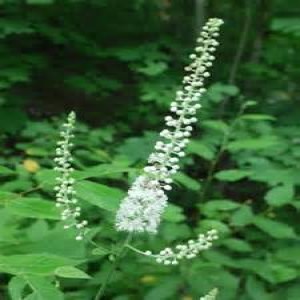
There is research suggesting that black cohosh (Cimicifuga racemosa) extract may be helpful for relieving menopausal symptoms such as hot flashes and night sweats. The herb has been used in Germany for more than 50 years, both for menopausal complaints and certain menstrual symptoms.
A 12-week, double-blind, randomized, multi-center study published in Obstetrics and Gynecology (2005; 105(5 Pt 1): 1074–1083) evaluated 304 women with menopausal symptoms. Participants received either a placebo or 40 mg per day of a standardized black cohosh extract (providing 5 mg of isopropanolic extract).
Based on scores from the Menopause Rating Scale, women receiving the standardized black cohosh extract experienced significantly greater symptom improvement than those receiving placebo. The extract appeared particularly effective for hot flashes, and no adverse effects were reported during the study period.
Earlier research published in the Journal of Women’s Health (1998; 7(5): 525–529) compared black cohosh extract with both conjugated estrogen and placebo. Women receiving black cohosh showed a notable increase in vaginal epithelial proliferation—exceeding that seen in the estrogen group. Improvements were also observed in Menopausal Index scores and on the Hamilton Anxiety Scale. Black cohosh has also been discussed in relation to reduced genital discomfort.
Additional research examined black cohosh in combination with St. John’s wort. A randomized, double-blind, placebo-controlled study published in Obstetrics and Gynecology (2006; 107(2 Pt 1): 247–255) included 301 women experiencing both menopausal symptoms and depression. Using the Menopause Rating Scale, the treatment group experienced approximately a 50% reduction in menopausal symptoms, compared with just under 20% in the placebo group. Scores on the Hamilton Depression Rating Scale improved by 41.8% in the treatment group, compared with 12.7% in the placebo group.
Together, these findings suggest that black cohosh—alone or in combination with other botanical extracts—may be linked with improvements in menopausal symptoms, including vasomotor complaints and mood-related measures. As with all botanical therapies, outcomes may depend on extract standardization, dosage, and individual variability.
Related articles:
Sesame and Post-Menopause Health
Menopause, Mitochondria & CoQ10: Early Clues for Brain Energy
Natural Treatment for Menopause Symptoms
Black Cohosh and Menopausal Symptoms