
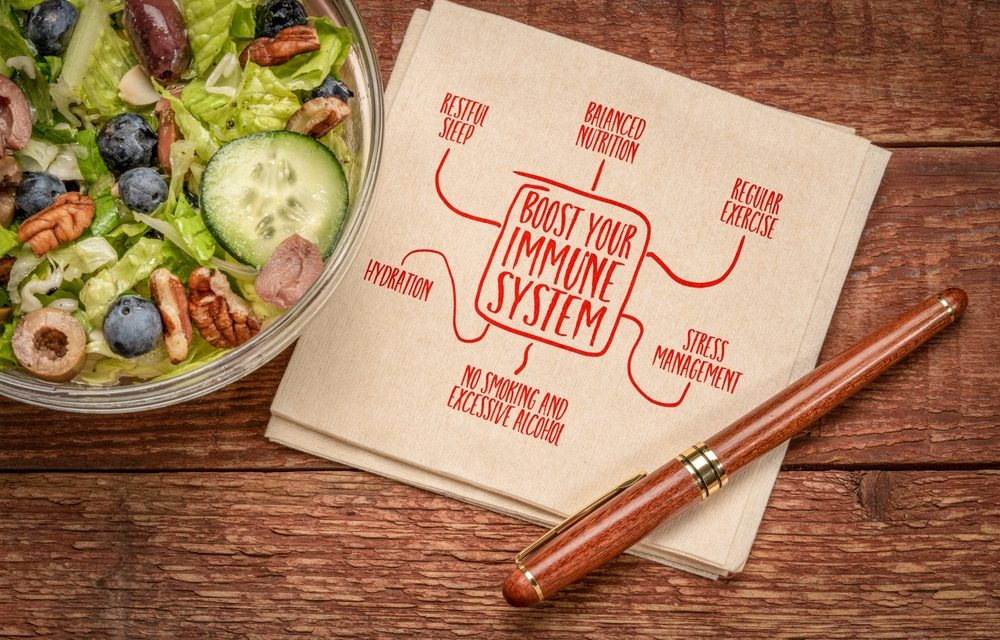
(Educational article – not medical advice)
TL;DR
The immune system is not just about fighting infections. It depends on digestion, the microbiome, nutrient status, and inflammation. Recurring infections often reflect underlying problems—especially after repeated antibiotic use. Supporting the immune system means restoring the body’s internal environment, not just “boosting” immunity.
SymptomQuiz: If you scored high in this category, you need immune support. The immune system is a broad category. Our goal is not to “fix” or treat it, but to give it enough support so it can improve. We are working on the body’s infrastructure.
Quick Cookbook: This is not treatment. These are simple steps to improve your Wellness Score over the next 30 days. To learn more, download the SymptomQuiz Manual.
- Follow the Roadmap to Health diet
- Take vitamin C (1000 mg/day)
- Take a probiotic
Immune System Health
Most people think of the immune system as something that attacks viruses and bacteria. That’s only part of the story. The immune system depends on:
- Proper digestion
- A healthy microbiome
- Adequate nutrient levels
- Inflammation under control
- Effective detoxification
If these systems are not functioning properly, the immune system will struggle—no matter how many supplements are taken.
Key Nutrients That Support Specific Immune Functions
Certain nutrients offer specific types of support. If any of the above systems are not functioning ideally, supplements may be a useful Band-Aid. Ideally, you want to ensure all the above systems are working properly. Which supplement you choose matters, because different supplements support different aspects of the immune system. We will mention a few here, but this is a vast topic. Read more about supplements for the immune system
Vitamin A, for example, helps support the body’s defense against viruses and maintains the integrity of mucosal barriers, which are important in recurring infections such as bronchitis or UTIs. Zinc is important because it helps mobilize vitamin A.
People with more compromised immune systems, such as the elderly, may benefit from mushroom supplements (shiitake, reishi, maitake) and, in some cases, thymus extracts.
A combination of quercetin and vitamin C may be especially helpful for people dealing with respiratory infections.
Vitamin C is found in high concentrations in white blood cells. It supports their ability to respond to invaders and plays a role in immune signaling. Research has shown antiviral activity and reductions in symptom severity in certain infections.
Inflammation and Detoxification: An Important Role in the Immune Response
An infection creates chemical warfare. Inflammation and free radical damage can be as dangerous as the infecting agent. During the COVID pandemic, thousands of people died—not from the virus, but from the inflammation and free radical damage triggered by the virus. A research review found low vitamin D predicts worse COVID outcomes; levels >30 ng/mL relate to lower mortality, and some experts suggest aiming >50 ng/mL [1]. Vitamin D helps the immune “brakes” (Tregs), and low vitamin D is linked to more inflammation, infections, and clot risk.
Glutathione is the principal agent for phase II detoxification in the liver. Glutathione must be used, recycled, and rebuilt—constantly. If that cycle slows down, detoxification becomes less efficient and oxidative stress can increase. Studies have shown that supplementing to boost GSH can protect against viruses as well as oxidative stress produced by infection [2,3].
It is clear that improving immune function goes far beyond taking supplements to “boost” immunity.
The Microbiome and Immunity
About 75% of your immune system is associated with the GI tract. It is there to protect you from anything harmful that may enter through the intestinal wall. Studies have shown that probiotics are extremely beneficial to the immune response [4-10]. This tells us that the bacteria in the intestines are a vital part of the immune system. A healthy microbiome means less inflammation and free radical damage. If you find that you need to keep taking probiotics, you may need to do more to ensure the health of your microbiome. Also, a healthy intestinal lining (i.e., no intestinal permeability or “leaky gut”) can keep undesirable organisms and substances out of the body. The microbiome and an intact intestinal lining are our first line of defense, protecting us not only from infection, but from allergy and autoimmune disease.
Why Some People Keep Getting Sick
Recurring infections are often a sign that something deeper is going on. A common pattern is:
- Repeated infections
- Repeated antibiotic use
- Temporary improvement
- Then the problem returns
Over time, this can lead to:
- Disruption of the microbiome
- Damage to the intestinal lining
- Increased inflammation
- Greater susceptibility to future infections
In these cases, the issue is not just the infection—it is the condition of the body’s internal environment.
The Gut–Immune Connection
About 75% of the immune system is associated with the digestive tract. When the gut is not functioning properly:
- The microbiome becomes imbalanced
- The intestinal barrier may be compromised
- Immune signaling can become dysregulated
This is why many chronic immune-related issues trace back to digestive health. One interesting supplement that works through the microbiome is arabinogalactan.
A Different Way to Think About Treatment
In natural healthcare, the goal is not simply to eliminate symptoms. It is to restore normal physiology. As one way to think about it: The issue is not just the infection—it is the condition of the body’s infrastructure. For some people, that infrastructure has been under stress for years. Recovery may take time and a more comprehensive approach.
Immune Support Overview
Supporting the immune system is not about a single nutrient or supplement. It involves:
- Improving digestion
- Restoring the microbiome
- Reducing inflammation
- Correcting nutrient deficiencies
- Supporting overall balance in the body
When these systems improve, immune function often improves along with them.
Next Steps to Support the Immune System
If you are dealing with recurring infections or ongoing immune issues:
- Follow a diet that reduces inflammation and supports the microbiome
- Address digestive function
- Consider targeted nutritional support
- Identify underlying imbalances
You can also use tools like the SymptomQuiz to help identify which systems may need the most attention.
Educational Disclaimer
This material is for educational purposes only and is not intended as medical advice. Consult with a qualified healthcare professional regarding any medical condition or treatment.
Related Articles:
Selected References:
- Journals Nutrients Volume 13 Issue 10 3390/nu13103596 COVID-19 Mortality Risk Correlates Inversely with Vitamin D3 Status, and a Mortality Rate Close to Zero Could Theoretically Be Achieved at 50 ng/mL 25(OH)D3: Results of a Systematic Review and Meta-Analysis
- Free Radical Biology and Medicine Volume 34, Issue 7, 1 April 2003, Pages 928-936 Inhibition of influenza infection by glutathione
- Front Microbiol. 2022 Oct 6;13:979719. Glutathione deficiency in the pathogenesis of SARS-CoV-2 infection and its effects upon the host immune response in severe COVID-19 disease
- International Journal of Sports Nutrition, Exercise and Metabolism(2011 Feb; 21(1): 55-64) Daily probiotic’s (Lactobacillus casei Shirota) reduction of infection incidence in athletes
- Epidemiology(23(3):402-414, May 2012 Probiotics supplementation during pregnancy or infancy for the prevention of atopic dermatitis: a meta-analysis
- Transl Pediatr. 2023 Apr 27;12(4):731–748. The effect of probiotics in the prevention of atopic dermatitis in children: a systematic review and meta-analysis
- Journal of Perinatology(33, 40-44 doi:10.1038/jp.2012.37) Probiotics supplementation increases intestinal blood flow velocity in extremely low birth weight preterm infants
- Cochrane Database 26 july 2023 Probiotics to prevent necrotising enterocolitis in very preterm or very low birth weight infants
- Inflammation & Allergy–Drug Targets (Volume: 11, Issue: 3, Year: June 2012, Pages: 244-249)
- Scientific Reports Published: 02 May 2024 The effects of probiotics supplementation on Helicobacter pyloristandard treatment: an umbrella review of systematic reviews with meta-analyses







