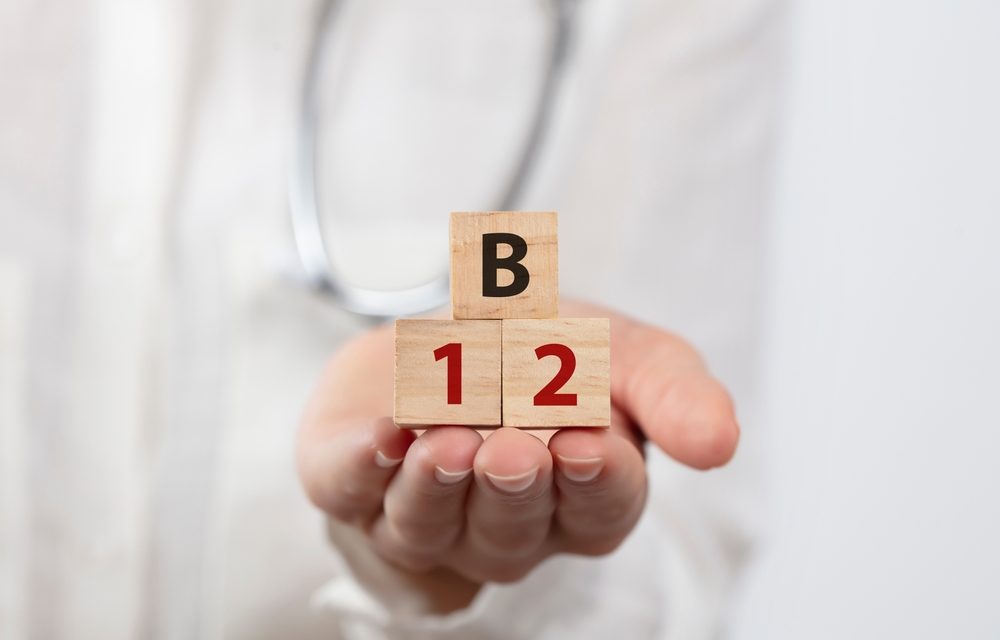
A study published in Clinical Nutrition examined 224 patients newly admitted to a psychiatric hospital and found that they had significantly lower serum folate levels than healthy controls. Low folate levels correlated with depression. The same relationship was not seen with serum cobalamin (vitamin B12), though this may reflect limitations of the test rather than a lack of association.
Why Serum B12 Can Be Misleading
Measuring serum cobalamin alone is not a reliable way to diagnose vitamin B12 deficiency. Research published in the American Journal of Hematology reviewed 419 cases of clinically diagnosed B12 deficiency. Elevated homocysteine and methylmalonic acid (MMA) were present in 95% of deficient patients, while only 69% showed low serum cobalamin levels.
Several patients had clear symptoms of B12 deficiency despite serum cobalamin levels above 200 pg/mL. Deficiency was defined clinically—as a syndrome affecting the nervous system, tongue, or hematopoietic system that responded to B12 treatment. The authors concluded that homocysteine and MMA are far more sensitive indicators of B12 deficiency than serum cobalamin.
It is important to note that elevated homocysteine can also result from folate deficiency, and in those cases will not normalize with B12 alone.
Aging, B Vitamins, and Mental Health
Vitamin B12 levels tend to decline with age, a finding confirmed in research published in Archives of Family Medicine. Many cases of depression, cognitive impairment, or other mental health issues in older adults may be related to unrecognized B12 or folate deficiency.
Supporting this, a study published in the European Journal of Clinical Investigation examined 296 elderly patients with diagnosed mental illness. Although more than 7% had normal serum B12, they also had elevated homocysteine levels. Treatment with vitamin B12 injections reduced homocysteine, and the addition of folic acid further improved levels in patients with low folate status.
Vitamin B12 and Cognitive Function
Vitamin B12 deficiency appears to be reversible—if caught early. A small pilot study published in the Journal of the American Geriatrics Society evaluated 22 patients with low serum B12 and cognitive dysfunction. Subjects received intramuscular B12 injections over six months.
Of the 18 patients who completed the study, 11 showed cognitive improvement as measured by the Mattis Dementia Rating Scale. Importantly, the degree of improvement correlated with how long symptoms had been present. The authors concluded that there is a narrow therapeutic window for treating B12-related cognitive decline and emphasized the importance of early and routine screening in the elderly.