TL;DR:
The hydrogen breath test is a simple, non-invasive way to check for bacterial overgrowth in the small intestine, but while it can provide useful clues, results are not always perfect and should be interpreted carefully.
This home breath kit measures gases that can indicate the presence of small intestinal bacterial overgrowth (SIBO). Click to learn more about the test. Small Intestinal Bacterial Overgrowth (SIBO)can cause symptoms of bloating, flatulent, diarrhea, constipation, and cramping.
How the Hydrogen Breath Test Works
Bacteria do not belong in the small intestine in significant numbers. When they are present, they can cause symptoms such as gas, bloating, and abdominal discomfort.
Certain bacteria feed on sugars and produce hydrogen as a byproduct. This principle is used in the hydrogen breath test:
-
Fasting: The patient fasts for about 12 hours before the test.
-
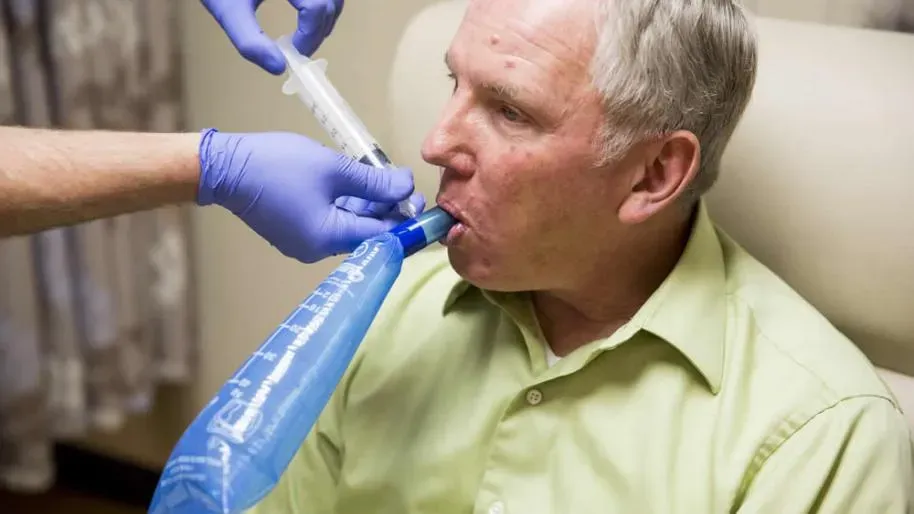
Baseline sample: The test begins by breathing into a balloon to measure baseline hydrogen.
-
Sugar dose: The patient consumes a measured amount of a sugar such as lactulose.
-
Breath samples: Every 15 minutes for 3–5 hours, the patient provides additional breath samples.
-
Interpretation: If bacteria are present in the small intestine, hydrogen levels rise earlier and higher than expected.
The test is not perfect. Some bacteria do not produce hydrogen at all, and results can be misinterpreted. However, in many cases, the hydrogen breath test can help detect bacterial overgrowth in the small intestine.
FAQ: Hydrogen Breath Test for SIBO
Q: How accurate is the hydrogen breath test?
A: The test can be useful, but it’s not perfect. Some bacteria don’t produce hydrogen, which may cause false negatives. In other cases, results can be misinterpreted. It’s one tool among several for evaluating gut health.
Q: How long does the test take?
A: The procedure usually lasts between three and five hours. Breath samples are taken every 15 minutes after consuming the sugar solution.
Q: What sugars are used in the test?
A: The most common are lactulose and glucose. These sugars feed bacteria in the small intestine, causing them to produce measurable hydrogen in the breath.
Q: Do I need to prepare for the test?
A: Yes. Typically, patients fast for about 12 hours before the test. Some foods and medications may need to be avoided beforehand, depending on your doctor’s instructions.
Q: If the test is positive, what happens next?
A: A positive result suggests small intestinal bacterial overgrowth (SIBO). Treatment may include diet changes, herbal protocols, or antibiotics — but the approach depends on the individual and should be guided by doctors trained in natural healthcare.