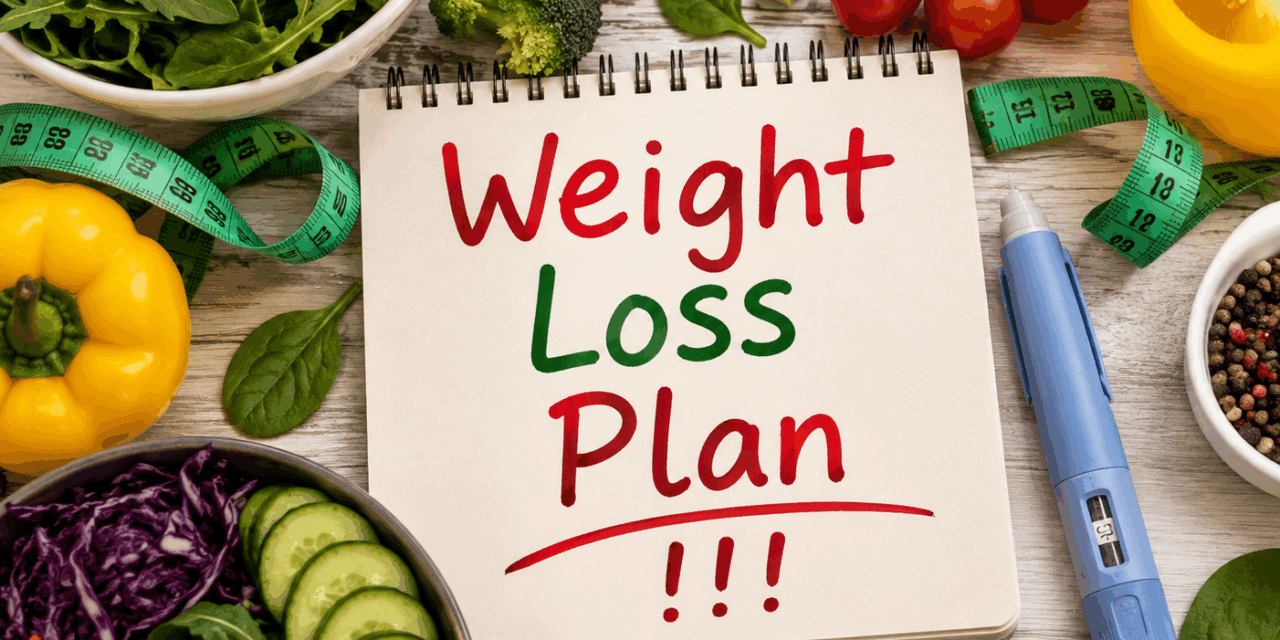
GLP-1 Can Help You Do Much More Than Lose a Few Pounds
This article is not necessarily an endorsement of Ozempic or other GLP-1 drug. Rather, it is recognition that this approach to weight loss has become very popular. Many people take these drugs to lose weight, and that is the only purpose they have in taking them. It is possible, however, to do something a little more profound. Think of the drug as an opportunity, not the entire solution.
Take Advantage of the GLP-1 Reduction in Appetite
Eat less and weigh less, right? That has been our focus for weight loss since Dr. Lulu Hunt Peters wrote her diet book in 1918; fewer calories mean less weight. Ah, but there is so much more to it. In the 1950s, about 10% of Americans were obese. In 2023, it was over 40%. This parallels the increase in the consumption of high fructose corn syrup and highly processed foods. These interfere with satiety, create inflammation, and disrupt the microbiome—all of which contribute to obesity (beyond caloric intake). What we eat and how it affects our metabolism may be more important than simply how much we eat.
Three Things That Will Improve GLP-1 Results
You’ll be eating less, GREAT! Now, try to think about weight loss in terms other than calorie restriction. Think of improving your metabolism, improving your microbiome, reducing inflammation, and supplying nutrients that may be in short supply.
- Avoid refined and processed food: Michal Moss is a reporter who has written books about the junk food industry and how they work to make junk food addictive. GLP-1 will make it easy for you to avoid refined sugar, chemical additives, and processed food, and break the habit. If it wasn’t available 10,000 years ago, it probably isn’t good for you. Eat only fresh, whole food in its natural state.
- Improve the microbiome (and lower inflammation). Having vegetables dominate the diet will provide fiber and polyphenols, both of which will help you develop a diverse microbiome. Studies have shown that the microbiome in thin people and the microbiome in fat people are very different from each other [1,2]. A healthier microbiome will help with dietary control after you’re off of the drug [3,6]. Landmark animal experiments demonstrated that transferring gut microbes from obese or lean human twins into germ-free mice caused the mice to take on the corresponding body fat traits, proving microbes impact energy harvesting [4]. Some practitioners are even recommending taking probiotics as a way to reduce side-effects, enhance GLP-1 activity, and improve the microbiome.
- Build muscle: Research shows that approximately 25% to 40% of the total weight lost while taking GLP-1 receptor agonist medications comes from lean mass (which includes muscle, water, bone, and organ tissue, such as the liver). Work to maintain muscle mass:
- Eat enough protein: The RDA for protein is 0.36 grams per pound each day.
- Train with weights: Aim for 2 to 3 full-body resistance sessions per week, lasting 20 to 30 minutes each, focusing on compound movements using bodyweight, resistance bands, or light dumbbells [5].
- Consider taking creatine: Taking creatine while on a GLP-1 medication is generally safe and can be a smart strategy. There are no direct drug interactions. Pairing creatine with resistance training helps protect against the lean muscle loss that often accompanies rapid weight reduction
Coming off Ozempic:
Most people coming off GLP-1 drugs regain the weight within 18 months [7]. There are steps you can take that will improve your odds of keeping the weight off. For one thing, wean from the drug. Do not quit suddenly. Click here for more information about coming off GLP 1 drugs.
Selected References:
- 2021 Dec 21;14(1):12. Gut Microbiome Composition in Obese and Non-Obese Persons: A Systematic Review and Meta-Analysis
- Scientific Reports volume 14, Article number: 24649 (2024) Composition of gut microbiota in obese and normal-weight Uygur adults and its association with adipocyte-related factors
- de Wouters d’Oplinter A, Rastelli M, Van Hul M, et al. Gut microbes participate in food preference alterations during obesity. Gut Microbes. 2021; 13(1):1959242. doi: 10.1080/19490976.2021.1959242.
- Science 6 Sep 2013 Vol 341, Issue 6150 Gut Microbiota from Twins Discordant for Obesity Modulate Metabolism in Mice
- Front Clin Diabetes Healthc. 2025 Nov 24;6:1720794. GLP-1 agonists and exercise: the future of lifestyle prioritization
- 2023 Jun 25;15(6):e40948. Exploring the Impact of the Gut Microbiome on Obesity and Weight Loss: A Review Article
- BMJ 2026;392:e085304 Weight regain after cessation of medication for weight management: systematic review and meta-analysis