TL;DR
Mucuna pruriens naturally contains L-dopa. In a clinical trial, the 30 g Mucuna dose worked faster, lasted longer, and produced higher L-dopa levels than standard L-dopa/carbidopa — with no increase in dyskinesias.
Educational purposes only.
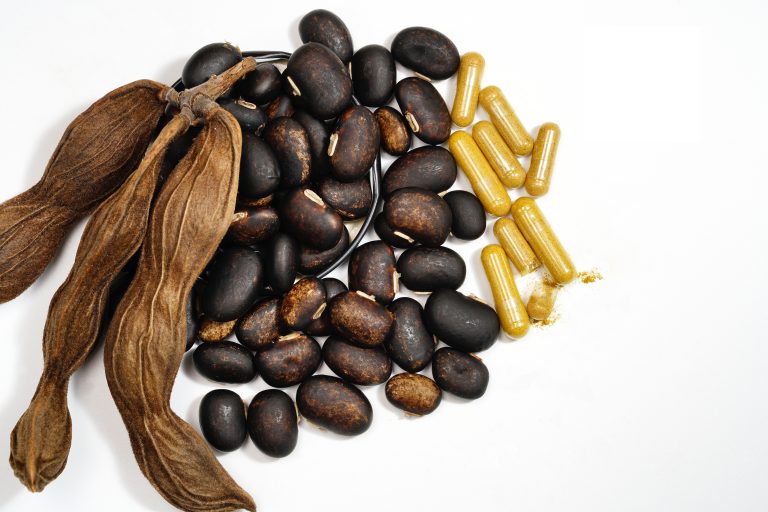
Cowhage (Mucuna pruriens) seeds have been used in Ayurvedic medicine for centuries to support neurological health. Laboratory analysis confirms that the seeds contain levodopa (L-dopa) — the same active compound found in several Parkinson’s disease medications.
A clinical trial published in Journal of Neurology, Neurosurgery & Psychiatry (2004; 75:1672–1677) compared Mucuna pruriens to standard L-dopa/carbidopa (LD/CD). Eight Parkinson’s disease patients participated in a randomized, double-blind, crossover study and received single doses of:
-
200/50 mg LD/CD
-
15 g Mucuna preparation
-
30 g Mucuna preparation
Blood levels of L-dopa and clinical responses were measured over four hours.
The 30 g Mucuna dose produced:
-
A faster onset of effect (about 34 minutes vs. 68 minutes with LD/CD)
-
Higher peak L-dopa levels (110% higher)
-
A larger total exposure (165% greater area under the curve)
-
Longer “on” time (about 37 minutes longer)
-
No increase in dyskinesias or adverse effects
These results suggest that Mucuna pruriens, as a natural source of L-dopa, may offer certain advantages over conventional formulations — particularly faster onset and longer duration of benefit. This information is educational only; work with doctors trained in natural healthcare.
More recent research supports these findings. A double-blind, randomized, controlled crossover trial published in Neurology (2017) compared several Mucuna pruriens preparations with dispersible levodopa/benserazide in 18 patients. Low-dose Mucuna produced similar motor benefits with fewer dyskinesias, while high-dose Mucuna led to greater motor improvement at 90 and 180 minutes, longer ON time, and fewer adverse effects. Cardiovascular responses were similar across all treatments. These results suggest that Mucuna may offer comparable or enhanced benefit with a more favorable tolerability profile.
FAQ
Does Mucuna pruriens actually contain L-dopa?
Yes. Laboratory analysis shows it naturally contains levodopa, the same compound used in Parkinson’s medications.
Is Mucuna as effective as standard L-dopa/carbidopa?
In one study, a 30 g Mucuna dose produced faster onset and longer benefit than LD/CD, without increased side effects.
Is Mucuna safe?
This study found no added dyskinesias or tolerability issues, but dosing matters. Always work with doctors trained in natural healthcare.
Why would Mucuna work faster?
It produced quicker rises in plasma L-dopa levels and higher peak concentrations than standard medication.