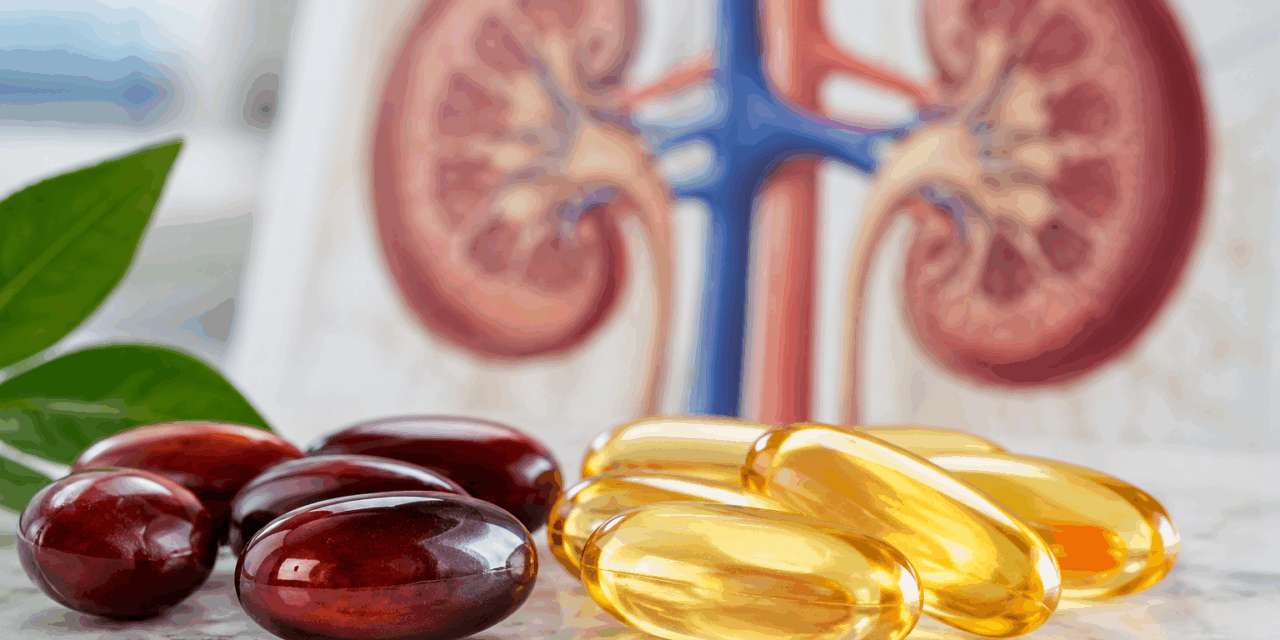
Can Supplements Help with Chronic Kidney Disease?
Taking supplements for chronic kidney disease (CKD) can be tricky. Depending on what stage of the disease, which drugs are being given, and whether or not dialysis is necessary can affect which supplements are helpful and which are harmful. If you have CKD, talk to your doctor before taking any supplements.
Two supplements that are frequently beneficial are CoQ10 and fish oil. This is not universal, if you are taking anticoagulant medication (“blood thinners”) or if blood clotting is an issue at all, you need to discuss this with your doctor.
CoQ10 and CKD:
CoQ10 is necessary for the cell to produce energy. Cells that require a lot of energy, like heart cells, require a lot of CoQ10. This is why CoQ10 is such a valuable supplement for patients with heart failure and other cardiac issues do so well by taking CoQ10.
It turns out that the kidneys also require a lot of energy. People with CKD often have low levels of CoQ10. Scientists are becoming more interested in as a supplement. Studies have shown that CoQ10 supplementation has improved the blood tests of people with CKD [1,2]. One study found that six weeks of CoQ10 supplementation improved biomarkers of inflammation, oxidative stress, and cellular energy production in people with moderate-to-severe CKD [3].
In patients with genetic mutations (like COQ2, COQ6, or COQ8B). also benefit from CoQ10 supplementation. Early and lifelong oral CoQ10 led to an 88% reduction in proteinuria at 12 months and drastically boosted 5-year kidney failure-free survival to 62% compared to just 19% in the untreated cohort [4].
Fish Oil and Chronic Kidney Disease
Fish oil, rich in omega-3 fatty acids (EPA and DHA), is widely studied for its kidney-protective properties, primarily through reducing systemic inflammation and lowering cardiovascular disease risk [5,6]. It is especially good for patients with IgA nephropathy and lupus nephritis. [5]. A recent randomized trial involving more than 1,200 dialysis patients found that fish oil supplementation reduced the rate of serious cardiovascular events by 43% [7]. Fish oil supplementation can also reduce the incidence of kidney stones in patients with that tendency [8].
Learn more about CKD; read our expanded article.
Selected References:
- Curr Pharm Des. 2018;24(31):3710-3723. The Effects of Coenzyme Q10 Supplementation on Metabolic Profiles of Patients with Chronic Kidney Disease: A Systematic Review and Meta-analysis of Randomized Controlled Trials
- Journal of Nutritional & Environmental Medicine Volume 13, 2003 Randomized, Double-blind, Placebo-controlled Trial of Coenzyme Q10 in Patients with End-stage Renal Failure
- Clin J Am Soc Nephrol. 2025 Mar 1;20(3):346-357. A Pilot Trial of Nicotinamide Riboside and Coenzyme Q10 on Inflammation and Oxidative Stress in CKD
- Kidney International Volume 102, Issue 3, September 2022, Pages 604-612 Oral Coenzyme Q10 supplementation leads to better preservation of kidney function in steroid-resistant nephrotic syndrome due to primary Coenzyme Q10 deficiency
- Curr Pharm Des. 2009;15(36):4149–4156. Omega-3 and Renal Function in Older Adults
- 2022 Dec 21;15(1):22. Habitual Fish Oil Supplementation and Incident Chronic Kidney Disease in the UK Biobank
- N Engl J Med 2026;394:128-137 Fish-Oil Supplementation and Cardiovascular Events in Patients Receiving Hemodialysis
- Journal of Clinical Lipidology Volume 18, Issue 1, January–February 2024, Pages e116-e124 Habitual fish oil supplementation, genetic susceptibility of kidney stones and the risk of new-onset kidney stones