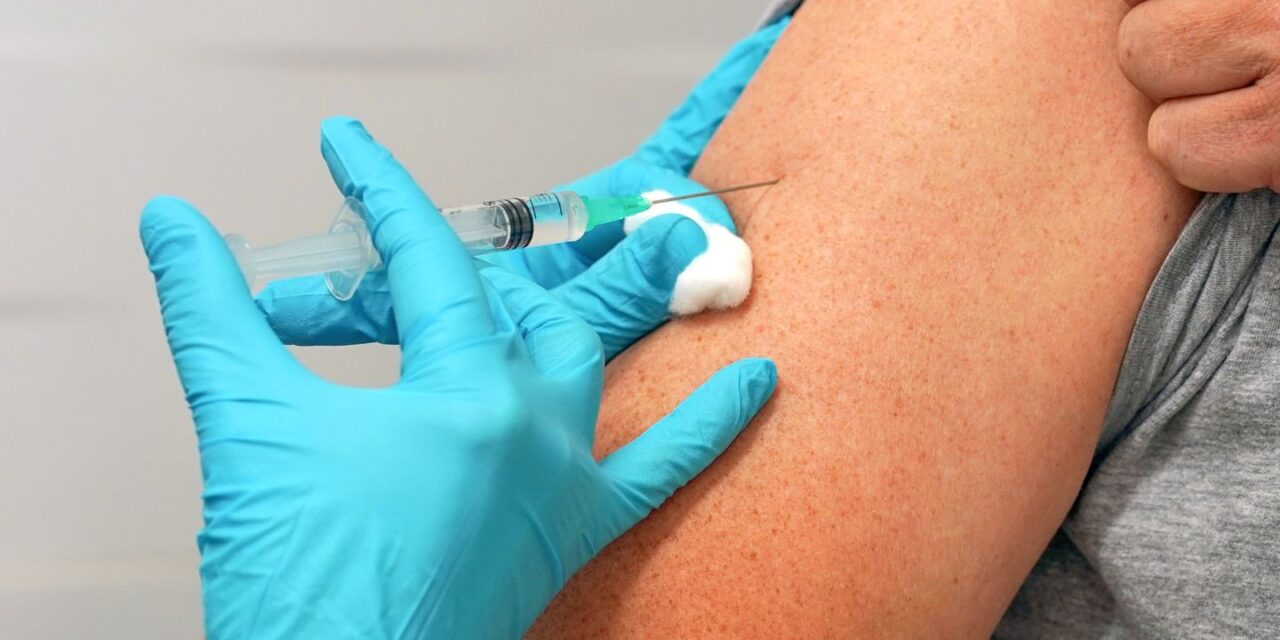
Discussion about politics or any controversial subject in the United States is much like the old Miller Lite Beer commercial. One side yells, “Tastes Great!” The other side yells, “Less filling.” It’s like that with discussions about vaccines. People on one side will deny any value to vaccines, “You know, it was the plumbers who cured polio—not the vaccine.” Or, on the other side, someone will question the idea of giving every newborn in the US a vaccine for a sexually transmitted disease at birth and be denounced as an antivaxxer.
As it is with any hotly contested issue, both sides have a point and both sides cling to irrational ideas. As it is with most things, the truth lies somewhere in the middle.
Does Antivaccine Show a Distrust of Our Institutions?
Doctors, the government and the media all tell us to vaccinate. Vaccines are scientifically proven. People who are against them are unhinged nut cases. Every baby in the US is given a hepatitis B inoculation. Why? Is my baby going to shoot drugs with a hooker before he leaves the hospital? [Fortunately, in 2026 that changed.] Insistence on something that irrational can possibly cause people to question the authority that insists on it. But there are other things in public policy that breed distrust.
You can’t sue for vaccine injury. Suing vaccine makers directly in a traditional civil court for design-related injuries was largely restricted when Congress passed the National Childhood Vaccine Injury Act of 1986 (NCVIA), and it was fully barred by a U.S. Supreme Court ruling on February 22, 2011.
In 1985, the standard childhood immunization schedule protected against seven diseases and involved about 10 vaccine administrations by age six. Today, a child following the routine schedule receives roughly 27 to 29 vaccine doses by age six—and more than 30 if annual influenza vaccination is included.
We get about 3x vaccines compared to 1985: In 1985, the estimated rate of autism in the United States was roughly 4 to 5 cases per 10,000 children (0.04% to 0.05%). Today, the Centers for Disease Control and Prevention (CDC) reports that approximately 1 in 31 children (about 3.2%) is identified with an autism spectrum disorder. Since this increase followed an increase in the vaccine schedule, vaccines got blamed.
Of course, the argument was made that lawsuits were causing manufacturers to stop making vaccines. As far as autism goes, there are many other assaults on the body. Researchers moved heaven and earth to show that vaccines were not the issue. Still, many parents view the policy like this: “the government forces me to vaccinate and won’t allow me to sue if anything bad happens—AND they keep adding shots”.
Vaccines Are “Safe”
According to the Centers for Disease Control and Prevention confirm that receiving several shots at one visit does not cause chronic health problems or weaken immunity. Maybe, but a significant portion of our population does not believe that and believes there is undue influence from the drug industry. Dr. Paul Offit has said that 10,000 vaccines could be given without causing any problems.
$5 billion in compensation, so maybe not always safe: Since the National Vaccine Injury Compensation Program (VICP) began in 1988, over 29,000 petitions have been filed. Out of those, the program has awarded compensation to 12,588 people, paying out a total of roughly $5.5 billion through court rulings and negotiated settlements. Clearly, vaccine injury exists, but it is never mentioned in the media. Safety is relative. Add that to the idea that the government can force you to be vaccinated, is it surprising that some people rebel? Who owns your body? You? Or the government?
Japan Has Responded to Vaccine Shortcomings—Have We?
In 1975, Japan temporarily suspended pertussis vaccination following reports of deaths after DTP vaccination. When vaccination resumed, the recommended starting age for pertussis vaccination was raised from about three months to two years. Reports of sudden death following pertussis vaccination subsequently fell sharply.
Unfortunately, when you hear a person who is strongly antivaccine discuss this, you may hear something like, “The Japanese ended SIDS by not vaccinating before the age of two.”
Bottom Line
English physician Edward Jenner created the world’s first successful smallpox vaccine using cowpox in 1796. He observed that milkmaids who caught mild cowpox were immune to deadly smallpox and tested the theory by inoculating an 8-year-old boy named James Phipps with cowpox fluid. Since then we have found that inoculation works for many diseases. Is vaccination a risk? It may be, in some cases. Should the decision be left to the individual? I leave that for you to decide.
Senator Rand Paul (R-KY) noted during public policy debates that he has heard of children who “wound up with profound mental disorders after vaccines,” using these anecdotes to advocate for a parent’s ultimate right to choose their child’s medical care. I have personally seen this. I remember one two-year-old who simply stopped developing after a vaccination.
There is a vehemence and anger at our institutions who many believe have been corrupted by the pharmaceutical industry. They say ridiculous things like, “The Amish don’t vaccinate and they don’t get autism.” (not true). I have even seen involved convoluted explanations about immunology and biochemistry that “prove” vaccines are harmful. We saw a lot of this during COVID. But, at its core, there is a valid point. If you mention that point, you may get shouted down as an “antivaxxer”. It is hard to find the truth when one side is yelling, “Tastes Great,” and the other side is yelling, “Less filling.”