TL;DR
- The brain is vulnerable to oxidative stress (free-radical damage).
- In a large Cache County cohort of older adults, higher intakes of vitamin C, vitamin E, and carotene (from food and/or supplements) were linked with better cognitive scores over time (PubMed).
- Aim for colorful fruits and vegetables daily. Consider the Roadmap to Health diet.
Why Antioxidants Matter (Plain English)
Free radicals are like tiny chemical bullets that can damage cells. Antioxidants—including vitamin C and carotenoids—act like little bulletproof vests and may support long-term brain health.
erm brain health.What the Study Found
- Who: Community-dwelling older adults in Cache County, Utah (≈3,800 participants, 65+).
- Follow-up: About 7 years with repeated cognitive testing (3MS).
- Finding: Higher intakes of vitamin C, vitamin E, and carotene were linked to higher baseline scores and slower decline on cognitive tests. Food sources showed particularly strong links (PubMed).
Takeaway: A produce-forward diet rich in vitamin C and carotenoids is a smart bet for healthy aging.
Food First: Easy Sources
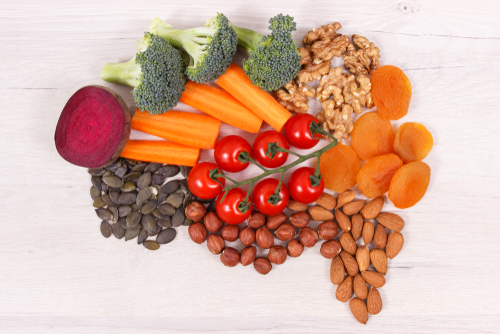
Vitamin C: citrus, kiwi, strawberries, bell peppers, broccoli, Brussels sprouts
Carotenoids (beta-carotene, lutein/zeaxanthin, lycopene): carrots, sweet potatoes, winter squash, kale/spinach, peppers, tomatoes
Absorption tip: Carotenoids are fat-soluble. Pair veggies with olive oil, avocado, nuts, or seeds.
Simple Plate Plan
- 5+ servings/day of fruits & vegetables (aim for ≥2 cups veg + 1–2 cups fruit).
- Eat the rainbow: dark green, orange, red, and yellow daily.
- Include protein + healthy fat for steady energy and better nutrient absorption.
Related Articles:
Is Beta Carotene Good for Your Brain?
Does Science Prove Your Mother Was Right?
FAQs
Do I need a vitamin C supplement?
Start with food. Consider supplements if intake is low or needs are higher—review with doctors trained in natural healthcare.
Do frozen or canned vegetables count?
It is better than nothing. Choose frozen over canned. Fresh is always best.
How fast will I notice benefits?
Diet patterns help over months to years. Consistency beats any single “superfood.”
Reference
Wengreen HJ, Munger RG, Corcoran CD, et al. Antioxidant intake and cognitive function of elderly men and women: the Cache County Study. J Nutr Health Aging. 2007;11(3):230–237. PubMed: https://pubmed.ncbi.nlm.nih.gov/17508099/