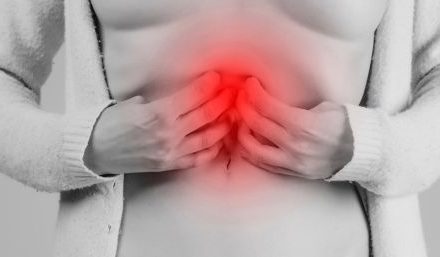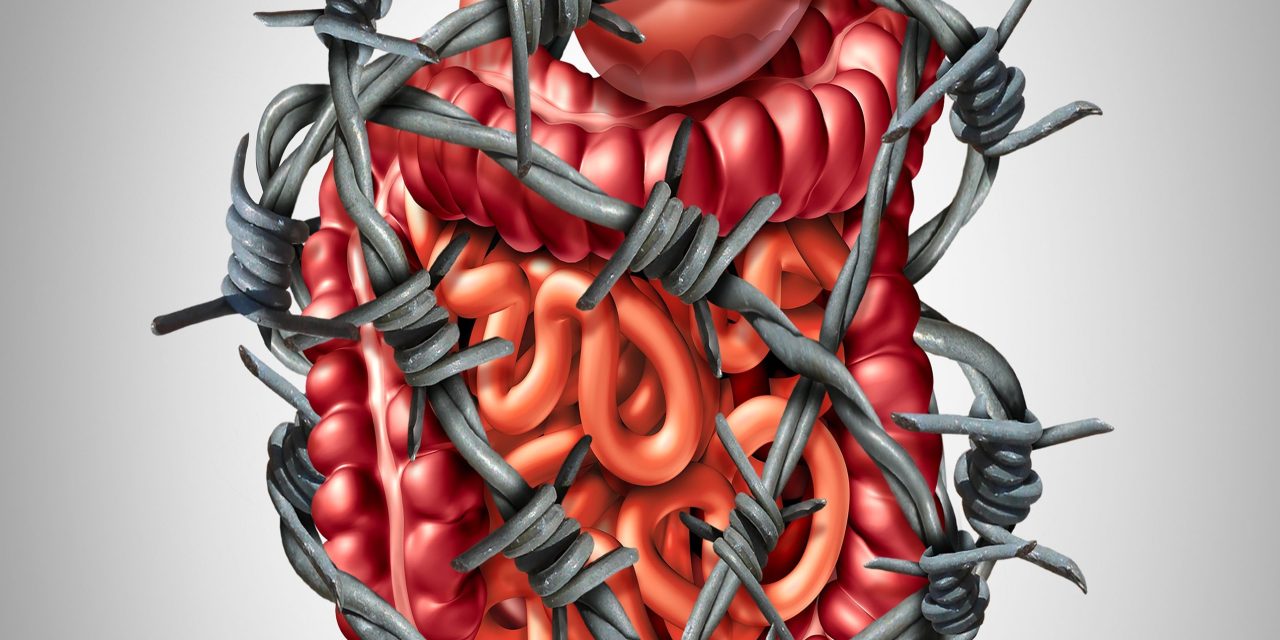
In the United States, it is estimated that 10% to 15% of the adult population suffers from irritable bowel syndrome (also called IBS) symptoms; yet only 5% to 7% of adults have been diagnosed with the disease. IBS is the most common digestive disease diagnosed by gastroenterologists and one of the most common disorders seen by primary care physicians. Signs and symptoms include cramping, abdominal pain, bloating, gas, and diarrhea or constipation, or both.
The Microbiome
The microbiome refers to the bacteria (also called flora) that grow in your intestines. Bacteria belong in the large intestine. There is around seven pounds of bacteria in the large intestine. There are more bacterial cells in your intestines than there are cells in your entire body (their cells are much smaller than yours). The microbiome is an ecosystem, so what is written below is an oversimplification. “Bad” bacteria are usually present, but as a minor part of the microbiome. The problem is with overgrowth and a lack of the “good” bacteria.
- Good bacteria, or bowel flora, does a lot of beneficial things for your body. They produce vitamins, nourish the intestinal lining, break down toxic materials, and keep bad bacteria in check.
- Bad bacteria, or bowel flora, produce toxins, create inflammation, irritate the intestinal lining, and inhibit the growth of normal bacteria. Most cases of IBS and other digestive problems are due to issues with the microbiome. Either the wrong kind of bacteria are growing, or the bacteria are in the wrong place (namely, the small intestine).
Bacteria Do Not Belong in the Small Intestine
SIBO is an acronym for “Small Intestine Bacterial Overgrowth”. Normally there are no bacteria in the small intestine. In SIBO abnormally large numbers of bacteria (usually defined as at least 100,000 bacteria per milliliter of fluid) are present in the small intestine. These bacteria cause a lot of problems. The symptoms of SIBO are the same as irritable bowel syndrome. The symptoms include abdominal bloating or distension, gas, diarrhea, and abdominal pain. In advanced cases, there may be vitamin and mineral deficiencies and weight loss.
Where Do Problems with the Bowel Flora Come From?
Your intestines are an ecosystem. What you put into your mouth, and the initial phase (digestion from chewing, stomach hydrochloric acid and pancreatic enzymes) determines what grows there. Most of what we call irritable bowel syndrome is the result of what is growing in our intestines. Here are a few of the ways that digestive problems develop:
- Diet: A diet that is high in refined carbohydrates (starch and sugar) feeds yeast and other pathological organisms. Chemical additives, hydrogenated oils and refined commercial vegetable oils can also cause problems. Not eating enough vegetables is also a problem. Fiber and nutrients from vegetables are needed to feed the good bowel flora.
- Not chewing your food thoroughly: When food is not properly broken down by chewing, hydrochloric acid from the stomach and enzymes from the pancreas must work much harder to complete digestion.Undigested food feeds undesirable bowel flora: it can also cause bacteria to grow in the small intestine, where it does not belong (SIBO).
- Antibiotics: Antibiotics kill infecting organisms, and they kill normal bowel flora as well. With the good bowel flora gone, yeast and other pathological organisms can grow in the intestines.
- Antacids: Taking a drug to relieve heartburn (also called gastroesophageal reflux disease, or GERD), can interfere with the initial phase of digestion. One class of drugs, called proton pump inhibitors (also known as omeprazole), which include Prilosec OTC, Zegerid OTC, OmePPi, and Zegerid, have been directly linked to IBS [1,2,3].
SIBO and IBS = Problems with the Microbiome
It is appropriate to discuss SIBO (small intestine bacterial overgrowth) and IBS at the same time. For one thing, SIBO is likely to be responsible for most cases of IBS (about 70%) [4,5]. One way to tell if the SIBO is present is with a breath test. Even if that is not the case, bacteria and the makeup of the microbiome is strongly linked to irritable bowel syndrome [6-15]. Probiotics have been used to treat IBS and SIBO by reducing hydrogen-producing bacteria, lessening abdominal pain, and improving symptoms, often with success rates comparable to some antibiotics [17]. Fecal transplant, also known as a stool transplant, is the process of transferring fecal bacteria and other microbes from a healthy individual into another individual. It has been used to successfully treat IBS [12]. That, combined with the fact that many cases of IBS begin as a gastrointestinal infection [13], indicate involvement of the microbiome with IBS.
Food Sensitivity & Celiac Disease
A systematic review and meta-analysis has concluded that celiac disease, as diagnosed by positive serology and positive biopsy, was four-fold more prevalent among patients with a clinical presentation of IBS than in non-IBS populations [16]. NCGS describes patients who develop reproducible symptoms after consuming gluten-containing foods, without evidence of celiac disease or wheat allergy. It is not autoimmune, and no biomarker currently exists; therefore, diagnosis requires a standardized double-blind, placebo-controlled gluten challenge. Patients may also have Other food sensitivities may also cause the problem.
Bottom Line
Irritable bowel syndrome is one of the most common digestive disorders, and growing evidence suggests that disturbances in the microbiome play an important role in many cases.
Small intestinal bacterial overgrowth (SIBO) occurs when bacteria grow in the small intestine, where relatively few bacteria should normally be present. Because the symptoms of SIBO and IBS are so similar, many clinicians consider bacterial overgrowth and microbiome imbalance when evaluating chronic digestive complaints.
The digestive tract functions as an ecosystem. Diet, digestion, medications, and the balance of bowel flora all influence how well that system works. When that ecosystem becomes disrupted, symptoms such as bloating, gas, abdominal pain, diarrhea, or constipation may appear.
What to Do About IBS and SIBO
Because disturbances in the microbiome appear to play an important role in IBS and SIBO, various strategies aimed at supporting digestion and restoring microbial balance are discussed in Natural Approaches to IBS and SIBO.
References:
- J Pediatr Pharmacol Ther. 2019 Nov-Dec;24(6):489-496 Proton Pump Inhibitors, H 2 Blocker Use, and Risk of Inflammatory Bowel Disease in Children
- Rev Gastroenterol Mex. 2019 Jan-Mar;84(1):44-51 Bowel symptoms in patients that receive proton pump inhibitors. Results of a multicenter survey in Mexico
- J Breath Res. 2018 Mar 12;12(3):036006 Long-term proton pump inhibitor therapy leads to small bowel bacterial overgrowth as determined by breath hydrogen and methane excretion
- Scand J Gastroenterol. 2015;50(9):1076-87 Molecular assessment of differences in the duodenal microbiome in subjects with irritable bowel
- J Gastroenterol Hepatol. 2011 Apr;26 Suppl 3:135-8 Small intestinal bacterial overgrowth (SIBO) in irritable bowel syndrome: frequency and predictors
- Dig Dis Sci. 2009 Jan;54(1):132-5 Incidence of predominant methanogenic flora in irritable bowel syndrome patients and apparently healthy controls from North India
- J Ethnopharmacol. 2019 Jun 12;237:182-191 Effect of water extract from Berberis heteropoda Schrenk roots on diarrhea-predominant irritable bowel syndrome by adjusting intestinal flora
- Dig Liver Dis. 2017 Apr;49(4):331-337 Altered molecular signature of intestinal microbiota in irritable bowel syndrome patients compared with healthy controls: A systematic review and meta-analysis
- Zhong Xi Yi Jie He Xue Bao. 2004 Sep;2(5):340-2 [Observation on intestinal flora in patients of irritable bowel syndrome after treatment of Chinese integrative medicine]
- Zhongguo Zhong Xi Yi Jie He Za Zhi. 2006 Mar;26(3):218-20 [Preliminary study on intestinal flora in diarrhea type irritable bowel syndrome with pi-wei dampness-heat syndrome]
- World J Gastroenterol. 2014 Mar 14;20(10):2449-55 Overgrowth of the indigenous gut microbiome and irritable bowel syndrome
- Expert Rev Gastroenterol Hepatol. 2018 May;12(5):439-445. Fecal microbiota transplantation for managing irritable bowel syndrome
- J Clin Gastroenterol. 2017 Nov/Dec;51(10):869-877 Postinfection Irritable Bowel Syndrome: The Links Between Gastroenteritis, Inflammation, the Microbiome, and Functional Disease
- Curr Opin Endocrinol Diabetes Obes. 2014 Feb;21(1):15-21 Irritable bowel syndrome, inflammatory bowel disease and the microbiome
- Chin Med J (Engl). 2019 Apr 20;132(8):889-904 Characteristic dysbiosis of gut microbiota of Chinese patients with diarrhea-predominant irritable bowel syndrome by an insight into the pan-microbiome
- Utility of diagnostic tests for celiac disease in irritable bowel syndrome: systematic review and meta-analysis. Gut. 2008;57(suppl II):A75.
- Probiotics Antimicrob Proteins. 2018 Mar 5;11(2):627–634. Effect of a Preparation of Four Probiotics on Symptoms of Patients with Irritable Bowel Syndrome: Association with Intestinal Bacterial Overgrowth