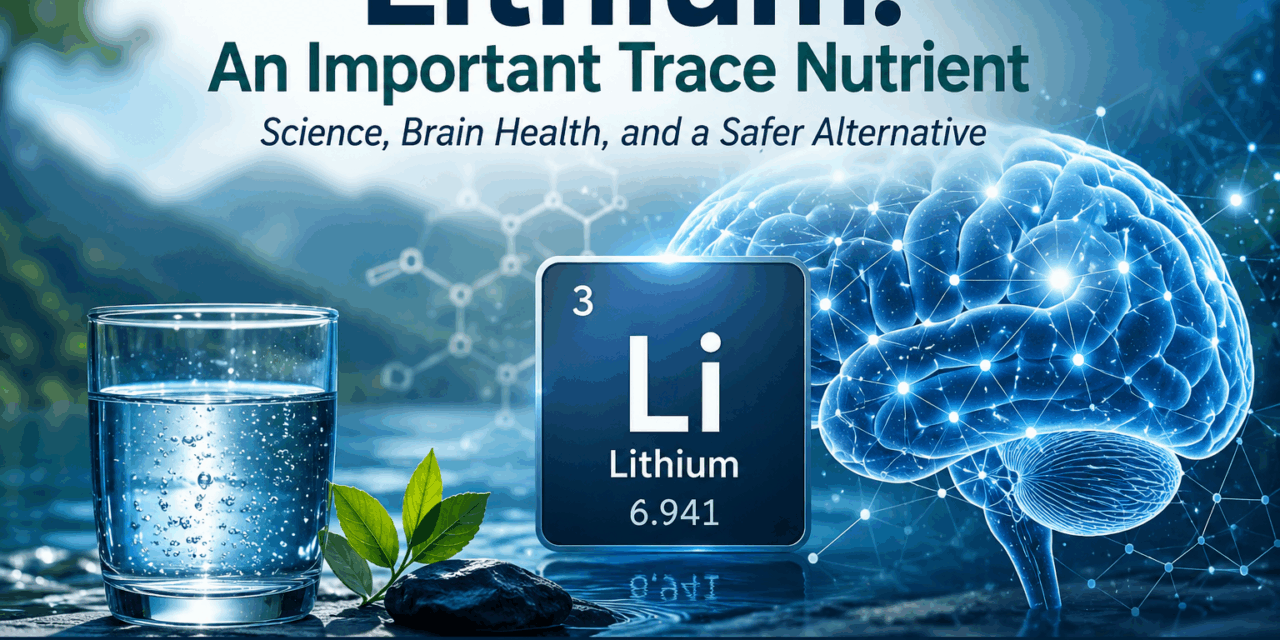
Lithium: An Important Trace Nutrient
Most people think of lithium as lithium carbonate, which is taken at high doses for patients with bipolar disorder. When it is used that way, it is a drug with side effects. Small amounts of lithium can be found in water and in some food. In low doses it is an important trace mineral.
Lithium, Mood, and the Nervous System
Lithium is very good for the brain and nervous system. In areas where it is found in the water supply, there is less substance abuse, depression, aggression, suicide, and homicidal violence1,2,3,4. One group of scientists suggested fortifying cereals and other foods as a way of curbing societal violence4.
Lithium is an important nutrient for the nervous system. One author concluded, “Lithium has been reported to be beneficial in animal models of brain injury, stroke, Alzheimer’s, Huntington’s, and Parkinson’s diseases, amyotrophic lateral sclerosis (ALS), spinal cord injury, and other conditions. A recent clinical trial suggests that lithium stops the progression of ALS5.”
If you have problems with mood, like depression or anxiety, a small amount of lithium orotate may help. If you are concerned about dementia when you get older, lithium may help. Lithium protects the brain by acting as an antioxidant and an anti-inflammatory substance6,7,8.
Try this: Talk to your doctor first.
- Roadmap to Health diet: Much of what goes wrong with the brain, like depression, anxiety, and dementia, is the result of inflammation. This diet will reduce inflammation.
- Lithium Orotate: Take a small amount (10-25 mg/day).
Click here for a more in-depth article about lithium.
Selected References:
- Biol Trace Elem Res. 2019; 189(1): 18–27 Is Lithium a Micronutrient? From Biological Activity and Epidemiological Observation to Food Fortification
- Biol Trace Elem Res. 1990 May;25(2):105-13 Lithium in drinking water and the incidences of crimes, suicides, and arrests related to drug addictions
- J Am Coll Nutr. 2002;21(1):14–21. Lithium: occurrence, dietary intakes, nutritional essentiality.
- Med Hypotheses. 2016 Apr;89:40-2. Is violence in part a lithium deficiency state?
- Cell Transplant 2009;18:951-975 Review of lithium effects on brain and blood
- J Neurochem. 2007 Aug;102(3):761-72. Chronic lithium administration attenuates up-regulated brain arachidonic acid metabolism in a rat model of neuroinflammation
- Ann Clin Psychiatry 2015;27(1):49-54 Is lithium a neuroprotective agent?
- Neurosci Lett. 2007 Jun 21;421(1):33-6. Oxidative stress parameters in unmedicated and treated bipolar subjects during initial manic episode: a possible role for lithium antioxidant effects