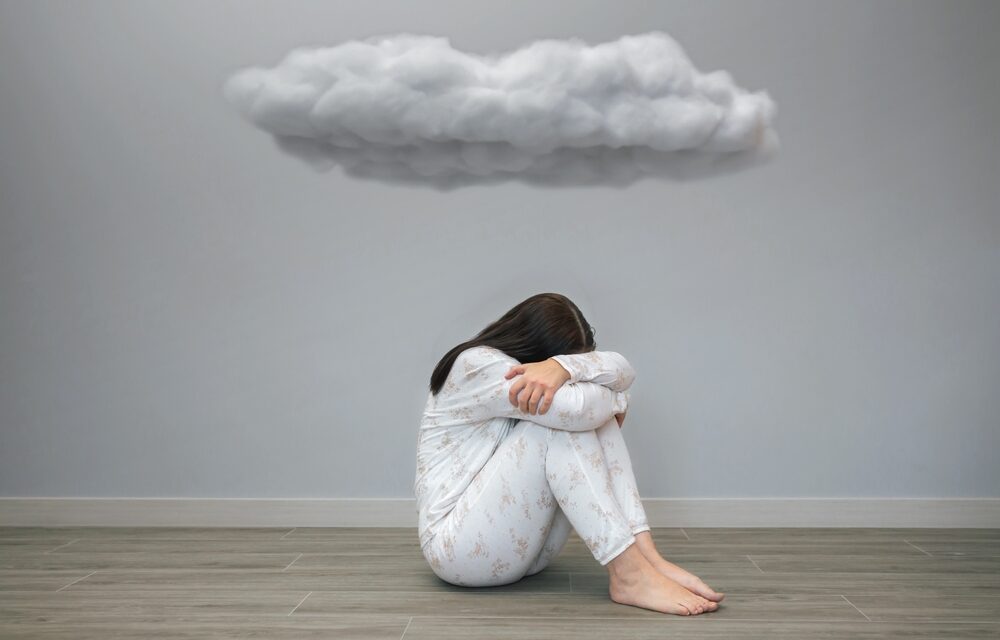
There is a mental health crisis in this country. One of the reasons is that the go-to treatment, SSRIs, is not very effective [1,2]. The brain is like any organ, the heart, lungs, or liver, if you do not give it what it needs, or if you take something that is toxic to it, it has problems functioning. If you have problems with your digestive system, you may get burning, nausea, diarrhea, or constipation. If the brain is having problems functioning, you get depression, anxiety, poor memory, or fatigue. Addressing the following will improve brain health providing an improvement in mood, memory, and energy:
- Inflammation: The brain and nervous system contain a lot of fat, and that makes them prone to inflammation. Researchers have linked anxiety and depression to inflammation [3-10].
- Lithium Orotate: Most people think of the drug, lithium carbonate, when lithium is mentioned. It is a very high dose and has side effects. Here, we are talking about lithium as a trace nutrient, NOT the drug. A small dose of lithium orotate can powerfully improve mood for the better [11,12].
- Thiamin (vitamin B1): Thiamin deficiency is much more common than is generally believed. Labs looking for thiamin deficiency are seldom performed. Thiamin affects energy production for the brain and early deficiency symptoms include issues with mood, memory and cognition. One study did find thiamin deficiency in 30% of psychiatric patients. In many cases, thiamin supplementation has been shown to help improve both depression and anxiety [13,14,23].
- Get cortisol under control: A lot of research has shown that stress and overproduction of cortisol (adrenal hormone) are linked to depression and anxiety [15-20].
- Light exercise: Exercise may actually outperform drugs in helping depression [21,22]. Do not do a heavy workout.
Try this for 30 days: Don’t think of this as treating depression. Think of it as improving brain health so your brain can more easily face the slings and arrows it is subjected to by daily life.
- Roadmap to Health diet [click to download diet]: The single biggest factor in depression and anxiety is inflammation. The easiest, best, and cheapest way to reduce inflammation is with diet.
- Daily Stress Formula: Many companies make multiple vitamins designed to help with stress. Generally, they have high doses of B vitamins (especially B5) and magnesium. Some have adaptogens like ashwagandha, rhodiola, or ginseng. Take according to manufacturer recommendation.
- Benfotiamine: Most brands have 200 mg of oil-soluble thiamin. Take 1/day. Thiamin deficiency can cause depression.
- Lithium Orotate (1 mg): Lithium (NOT the drug given for bipolar disorder) helps improve mood, reduce the urge for substance abuse, and helps protect the nervous system. Take 1/day.
- Light exercise: Do not do a heavy workout. Simply walking or lifting light weights will help reduce cortisol (heavy workouts increase it).
Selected Referemces:
- (Br J Psychiatry. 2011 Jan;198(1):11-6, sup 1) Efficacy of antidepressants and benzodiazepines in minor depression: systematic review and meta-analysis
- Psychother Psychosom (2010) 79 (5): 267–279. Efficacy and Effectiveness of Antidepressants: Current Status of Research
- Psychoneuroendocrinology 2013 Sep; 38(9): 1573-85 Differential association of somatic and cognitive symptoms of depression and anxiety with inflammation: findings from the Netherlands Study of Depression and Anxiety (NESDA)
- Brain Behav Immun. 2015 Jul;47:193-200 Inhibition of tumor necrosis factor improves sleep continuity in patients with treatment resistant depression and high inflammation
- Anxiety in relation to inflammation and coagulation markers, among healthy adults: the ATTICA study Atherosclerosis. 2006 Apr;185(2):320-6.
- Inflammation in Fear- and Anxiety-Based Disorders: PTSD, GAD, and Beyond Neuropsychopharmacology. 2017 Jan;42(1):254-270.
- Inflammatory markers in post-traumatic stress disorder: a systematic review, meta-analysis, and meta-regression Lancet Psychiatry. 2015 Nov;2(11):1002-12
- Redox Rep. 2002;7(4):199-206. Implications of the kynurenine pathway and quinolinic acid in Alzheimer’s disease
- J Alzheimers Dis. 2018;62(2):523-547 Alzheimer’s Disease: Recent Concepts on the Relation of Mitochondrial Disturbances, Excitotoxicity, Neuroinflammation, and Kynurenines
- Front Psychiatry. 2021; 12: 682868. Serotonin Reuptake Inhibitors and the Gut Microbiome: Significance of the Gut Microbiome in Relation to Mechanism of Action, Treatment Response, Side Effects, and Tachyphylaxis
- Biol Trace Elem Res. 1990 May;25(2):105-13 Lithium in drinking water and the incidences of crimes, suicides, and arrests related to drug addictions
- J Am Coll Nutr. 2002;21(1):14–21. Lithium: occurrence, dietary intakes, nutritional essentiality.
- Adjuvant thiamine improved standard treatment in patients with major depressive disorder: Results from a randomized, double-blind, and placebo-controlled clinical trial. Eur. Arch. Psychiatry Clin. Neurosci. 2016, 266, 695–702.
- The impact of thiamine treatment on generalized anxiety disorder. Int. J. Clin. Med. 2011, 2, 439.
- J Affect Disord. 2018 Jun;233:45-67. Atypical depression and non-atypical depression: Is HPA axis function a biomarker? A systematic review
- Patriquin M.A., Mathew S.J. The Neurobiological Mechanisms of Generalized Anxiety Disorder and Chronic Stress. Chronic. Stress (Thousand Oaks) 2017;1
- Lin E., Tsai S.J. Gene-Environment Interactions and Role of Epigenetics in Anxiety Disorders. Adv. Exp. Med. Biol. 2020;1191:93–102.
- Conway C.C., Rutter L.A., Brown T.A. Chronic environmental stress and the temporal course of depression and panic disorder: A trait-state-occasion modeling approach. J. Abnorm. Psychol. 2016;125:53–63.
- Wade S.L., Monroe S.M., Michelson L.K. Chronic life stress and treatment outcome in agoraphobia with panic attacks. Am. J. Psychiatry. 1993;150:1491–1495.
- Patriquin M.A., Mathew S.J. The Neurobiological Mechanisms of Generalized Anxiety Disorder and Chronic Stress. Chronic. Stress (Thousand Oaks) 2017;1
- November, 1999 issue of the Annals of Behavioral Medicine
- Sports Medicine and Physical Fitness (December 2001;41;539-545).



![What to Do About the Mental Health Crisis [Part 1 of 5]](https://wholehealthweb.com/wp-content/uploads/2026/06/taking-a-depression-pill-2-440x264.jpg)