
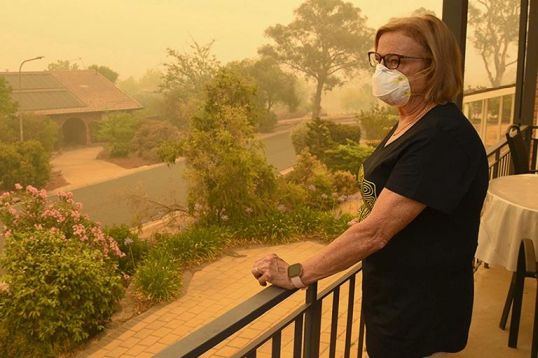
First, Reduce Exposure to Smoke:
Smoke is the problem, so the first priority is to breathe less of it. Use a HEPA air filter, wear a face mask outside, and keep your windows closed. Then give your lungs a little help by lowering inflammation and supporting the tissues that line your airways.
Quercetin May Help Protect the Airways
Quercetin is a plant flavonoid with powerful antioxidant and anti-inflammatory properties. Researchers have become interested in it because studies suggest it can reduce lung inflammation, decrease oxidative stress, and help damaged airway tissue repair itself more normally.
In COPD, the cells that repair the lining of the airways don’t work as well as they should. Instead of rebuilding a healthy airway, they produce too much thick mucus and not enough tiny hair-like cilia that help sweep mucus and germs out of the lungs.
In this study, quercetin helped these repair cells grow a healthier airway lining. It increased the number of cilia, reduced mucus-producing cells, and lowered inflammation. It also switched on genes involved in repairing and rebuilding healthy lung tissue.
In a small six-month clinical trial, people with COPD taking quercetin showed similar improvements in several genes involved in repairing the airway lining. Among smokers, quercetin also reduced important markers of inflammation in the airways [1]. This is supported by other research [2-4], including earlier animal studies and in vitro studies.
Early research suggests quercetin may help support normal lung function. Larger clinical trials are still needed. More broadly, people who consume higher amounts of flavonoids from foods tend to have a lower risk of COPD and better lung health. [4]. In general, flavonoids (of which quercetin is one), are beneficial to people with lung disease [6,7].
Vitamin C and COPD
Vitamin C has been studied and shown to be beneficial to patients with COPD. It too is an antioxidant, is anti-inflammatory and helps to relax the airways [8]. Many nutrients have antioxidant effects, but vitamin C deserves special attention because it works well with quercetin. For example, they work well together in helping the immune system against viruses [9].
Recent studies have highlighted a promising synergistic interaction between flavonoids and vitamin C, wherein flavonoids (like quercetin) enhance the stability, recycling, and intestinal absorption of vitamin C, while vitamin C augments the antioxidant capacity and cellular bioactivity of flavonoids. This review critically summarizes current evidence regarding the independent and combined effects of flavonoids and vitamin C [10-12].
What Is the Takeaway?
In natural healthcare we are usually dealing with therapies that are low risk and potentially have a high return. There are seldom side effects and when something makes physiological sense, it is often worth trying. Drug studies tend to be larger than natural healthcare studies. In natural healthcare we usually end up looking at multiple small studies and combine them with what we know about physiology to come up with a reasonable approach. Also, we tend to combine therapies because we are not looking for a singular “cure”; we are looking for ways to support the system and improve health. When looking at something like COPD or other lung disease, the idea of taking something that is safe and has some science showing that it protects the airways is reasonable.
Be practical: If smoke levels are high, the foundation is always to reduce exposure first. A HEPA air purifier, a well-fitting mask outdoors, and staying indoors when air quality is poor will likely have a much greater effect than any supplement. Quercetin and vitamin C are best viewed as supportive measures—not replacements for reducing smoke exposure or following your doctor’s treatment plan.
Selected References:
- Respir Res. 2024 Mar 11;25(1):120. Quercetin improves epithelial regeneration from airway basal cells of COPD patients
- Pharmacological Research – Natural Products Volume 7, June 2025, 100252 Effect of oral treatment with quercetin on inflammatory and oxidative stress markers in patients with chronic obstructive pulmonary disease
- Eur Respir J. 2022 Aug 10;60(2):2102604 Flavonoid intakes inversely associate with COPD in smokers
- BMJ Open Respir Res. 2020 Feb 17;7(1):e000392 Randomised clinical trial to determine the safety of quercetin supplementation in patients with chronic obstructive pulmonary disease
- Pharmacol., 16 December 2024 Sec. Respiratory Pharmacology Volume 15 – 2024 |
- Am J Respir Crit Care Med. 2001 Jul 1;164(1):61-4. Chronic obstructive pulmonary disease and intake of catechins, flavonols, and flavones: the MORGEN Study
- Eur Respir J. 2022 Aug 10;60(2):2102604. Flavonoid intakes inversely associate with COPD in smokers
- 2023 Feb 27;31(2):653–672. The effects of vitamin C on respiratory, allergic and immunological diseases: an experimental and clinical-based review
- Front Immunol. 2020 Jun 19:11:1451. Quercetin and Vitamin C: An Experimental, Synergistic Therapy for the Prevention and Treatment of SARS-CoV-2 Related Disease (COVID-19)
- Askari G. The effect of quercetin supplementation on selected markers of inflammation and oxidative stress. J Res Med Sci 2012; 17(7): 637-641.
- 2014 Nov-Dec;30(11-12):1279-86. Quercetin bioavailability is associated with inadequate plasma vitamin C status and greater plasma endotoxin in adults
- Sci. 2026, 16(4), 1838; Beneficial Synergistic Roles of Flavonoids and Vitamin C Against Inflammatory Complications, Cancer, and Cardiovascular Diseases: A Comprehensive Review







