
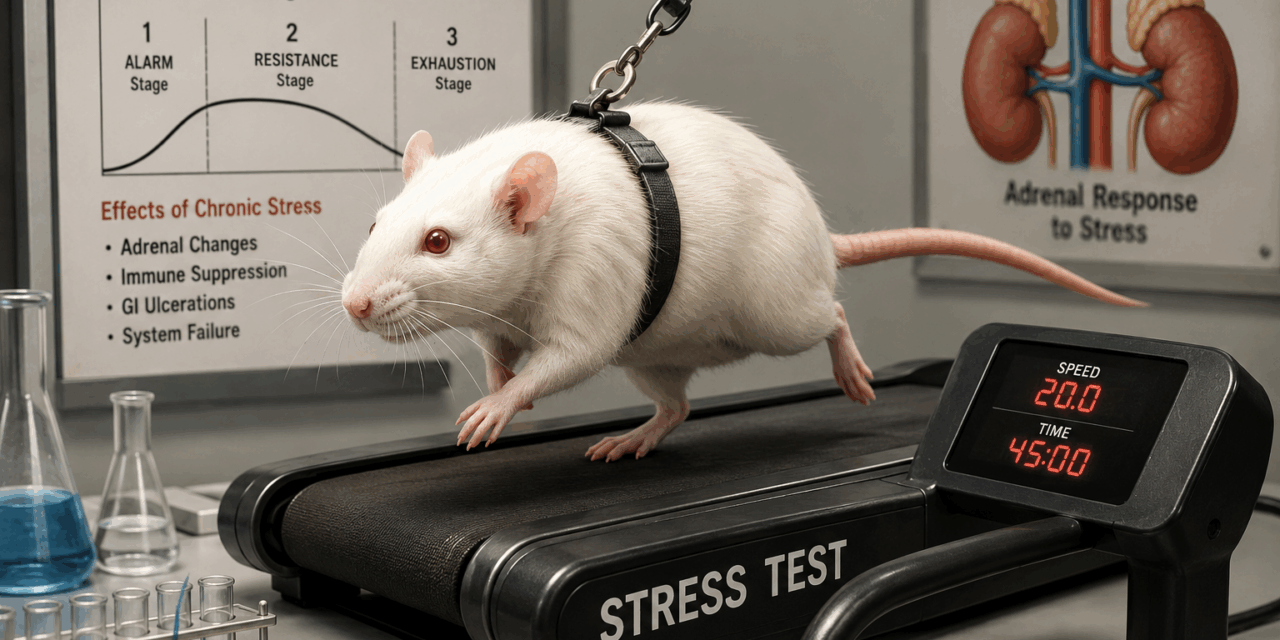
Dr. Hans Selye studied the effects of stress on rats. He placed them under stress and studied the changes in their bodies. His first attempt, auditing their taxes, failed. Lab rats are on the short form and do not keep track of deductions. He then tied their legs together and made them tread water. Selye noted the changes in their bodies at various times during their ordeal. He found three stages of stress.
3 Stages of Stress
Dr. Selye took the rats at various stages of their ordeal and dissected out their adrenal glands. He found that the adrenal glands responded to stress in three distinct stages.
- Alarm Stage: The body releases hormones like adrenaline and cortisol, increasing heart rate, breathing, and alertness. You may not notice there is a problem, or you may have problems falling asleep. You may feel “wired”.
- Resistance Stage (Adaptation): The increase in hormones continues. You may appear to be “coping” or successfully enduring the stress, it comes at a high metabolic cost. The body is essentially running on borrowed reserves, drawing heavily on adaptation energy.
- Exhaustion Stage: It occurs when prolonged, chronic stress depletes the body’s physical, emotional, and mental resources, leaving it unable to cope or fight back. If left unresolved, it can lead to severe health issues, burnout, and disease. In Selye’s rats, the adrenal glands shrunk. They developed ulcerations in the GI tract, immune tissues shrunk, there were many systems failing, and the rats died.
Stress Affects Every Organ and System in the Body
Prolonged stress undermines your health. Stress can contribute to or aggravate a wide range of problems, including high cholesterol, heart disease, high blood pressure, colitis and irritable bowel symptoms, allergies, asthma, headaches, obesity, type-2 diabetes, eczema, chronic pain, chronic fatigue, fibromyalgia and even depression. It can also weaken the immune system, making you more susceptible to frequent colds and other illnesses. Even serious diseases, like heart disease and cancer, appear to respond to stress reduction.
Chronic stress often pushes the body into “sympathetic dominance,” also called the fight-or-flight response. In this state, the body behaves as if it is constantly being chased or threatened. Blood flow shifts away from digestion and toward muscles, heart rate and blood pressure increase, muscles tighten, and the body becomes “wired.”
Get Stress Under Control—NO MATTER What Health Issue You Are Dealing With
Lifestyle changes to help the adrenals: You can improve your adrenal function without stressing the glands. The following steps will improve your health and help you to overcome the effects of stress.
- Meditation: Meditation, yoga, Tai Chi, or simple deep breathing exercises can help you bring stress under control. Much of the damage that stress does to your health is not due to any external factors, but rather how your mind interprets those factors. Meditation and other techniques help to reduce the harm of stress by quieting the mind.
- Sports and hobbies: Meditation and yoga may be a little “New Age” for some people. Hobbies are a good solution for these people. Most hobbies are relaxing; your mind has to focus on a simple task rather than on sources of stress.
- Exercise: Moderate aerobic exercise is good. This is exercise that uses large muscles repetitively and is mild enough that you can carry on a normal conversation during the activity. Anaerobic exercise (working so hard that you can’t carry on a normal conversation) can be stressful and should be limited while the adrenal glands are recovering.
Stress Is Cumulative: Diet and Supplementation Matter
There are many types of stress. Chemical, physical, thermal, and mental stresses can all cause harm to the body. Stress is cumulative. A stressful job situation is compounded by a poor diet. Avoid chemical additives and sugar, refined carbohydrates, and hydrogenated oil. Eat plenty of vegetables and make sure that you get enough protein. At mealtime relax and focus on enjoying your food; don’t eat on the run. Follow the Roadmap to Health diet. It is rich in trace nutrients. A free PDF is available on this site.
What about supplements? Many supplements can help. Magnesium comes to mind. However, they should be chosen on an individual basis. Supplementation should focus on your particular health issues. Adrenal support, of course, is useful, but it may not be the best solution for you. If, for example, you are having immune system issues, you will need to focus on that first. Take the SymptomQuiz to see what you should be focusing on. In the meantime, make the above lifestyle changes.







